
Supporting 50+ Saudi business groups | Consolidated reporting expertise | Inter-company automation | Family business
Enterprise ERP for Saudi Family Business Groups and Multi-Entity Organizations
Comprehensive multi-entity management enabling independent operations across legal entities whilst providing consolidated group visibility and control—purpose-built for Saudi family businesses and holding companies.

Why Multi-Entity ERP Matters for Saudi Business Groups
Saudi Arabia's business landscape is dominated by family-owned business groups and holding companies managing multiple legal entities across diverse sectors. These organizational structures—deeply rooted in Saudi business culture—create specific operational and financial management challenges traditional ERP systems cannot address effectively.
Single-entity ERP platforms force businesses to operate separate systems for each entity creating data silos, manual consolidation and operational inefficiency. Generic multi-entity approaches designed for Western corporate structures fail to accommodate Saudi family business realities including complex ownership structures, inter-family entity relationships and unique governance requirements.
The Multi-Entity Challenge
- Manual Consolidation Complexity
- Inter-Company Transaction Inefficiency
- Inconsistent Processes and Controls
- Limited Group Visibility
- Inefficient Resource Sharing
- Governance and Compliance Complexity
Manual Consolidation Complexity Saudi business groups operating separate ERP instances for each entity face painful monthly consolidation processes. Finance teams spend days or weeks manually compiling data from multiple systems, reconciling inter-company transactions and preparing consolidated financial statements for family governance or external stakeholders.
Inter-Company Transaction Inefficiency Entities within Saudi business groups frequently transact with each other—buying and selling goods, sharing services and transferring resources. Without automated inter-company processing, these transactions require manual creation in both entities' systems, manual reconciliation and error-prone elimination calculations.
Inconsistent Processes and Controls Different entities operating different systems develop divergent business processes and controls. This inconsistency creates governance challenges, prevents knowledge sharing and complicates group-wide initiatives.
Limited Group Visibility Family business leadership needs real-time visibility into performance across the entire group. Fragmented systems provide only entity-level visibility requiring manual compilation for group perspective—delaying decisions and limiting strategic agility.
Inefficient Resource Sharing Business groups benefit from sharing resources—purchasing power, shared services, talent mobility and knowledge transfer. Disconnected systems prevent systematic resource optimization across group.
Governance and Compliance Complexity Saudi business groups must maintain proper governance including appropriate segregation between entities whilst demonstrating consolidated control for stakeholders including banks, government agencies and family councils.
Our Multi-Entity ERP Solutions
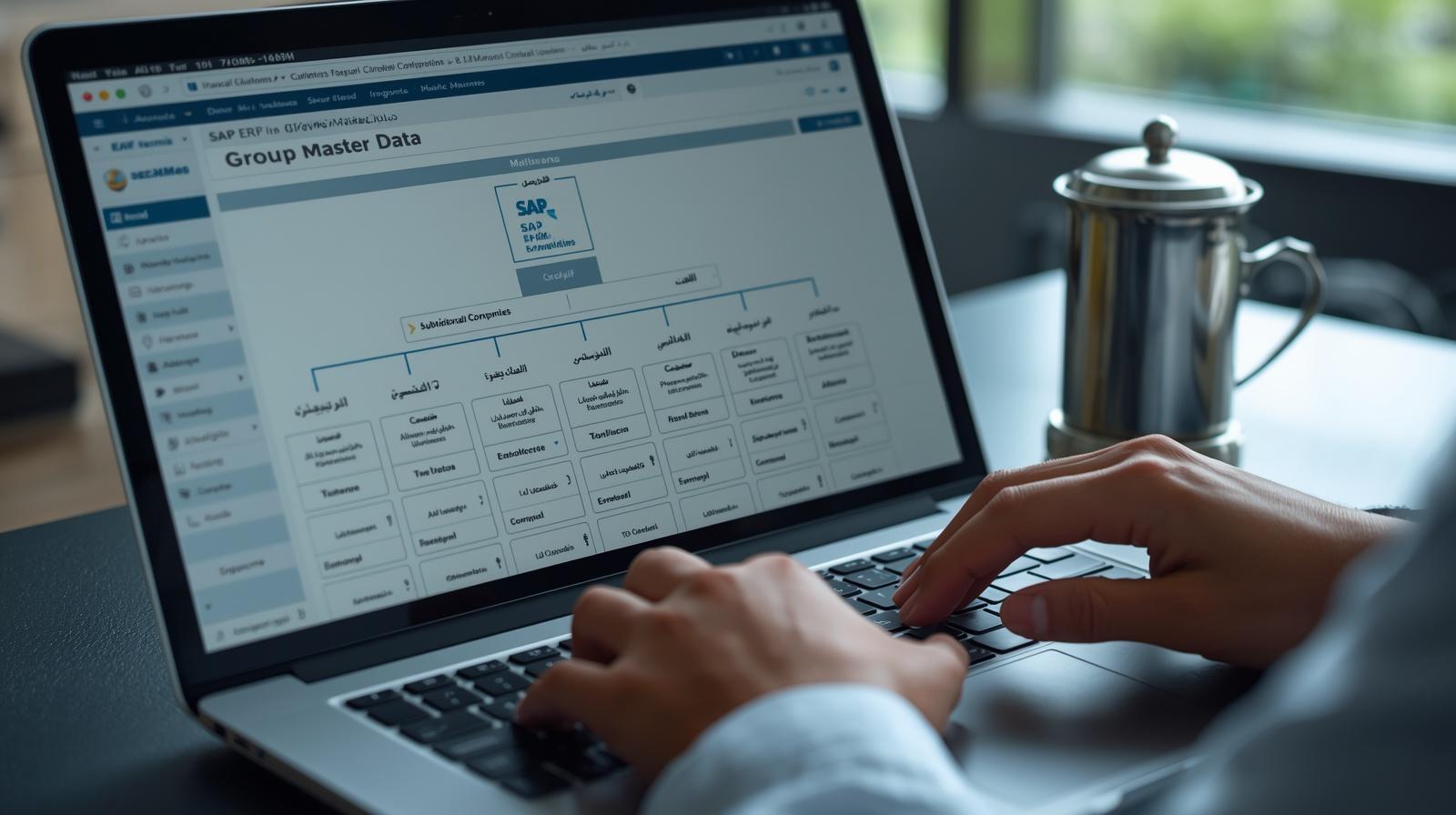
Integrated Multi-Entity Platform
Single System Supporting Multiple Legal Entities
Comprehensive ERP platform managing unlimited legal entities within unified system whilst maintaining proper entity independence and consolidated group control.
Core Capabilities:
- Independent financial books and compliance for each entity
- Consolidated group-level reporting and analytics
- Automated inter-company transaction processing
- Master data sharing and synchronization
- Group-wide process standardization
- Centralized control with distributed operations
Ideal For: Family business groups, holding companies, diversified conglomerates, multi-sector organizations, businesses with subsidiary structures

Multi-Entity Architecture for Saudi Business Groups
Designed for Family Business Reality
Flexible architecture accommodating Saudi family business structures including complex ownership, family holdings and cross-entity relationships common in Kingdom business groups.
Architecture Features:
- Multiple operating entities under holding company
- Shared services entities providing support
- Joint venture and partnership entities
- Different sectors and business models per entity
- Variable ownership structures
- Family office integration
Benefits: Natural alignment with Saudi family business structures, flexible configuration supporting unique organizational designs, scalability as group evolves
Key Multi-Entity Capabilities

Independent Entity Operations
Autonomy with Accountability
Each legal entity operates independently with its own books, compliance and operational control whilst maintaining group standards and visibility.
Entity Independence:
- Separate chart of accounts per entity
- Independent financial periods and calendars
- Entity-specific VAT and Zakat compliance
- Separate banking and cash management
- Entity-level budgets and controls
- Independent operational parameters
Benefits: Proper legal entity segregation, compliance with Saudi company law, operational flexibility for diverse businesses, clear accountability per entity

Consolidated Group Reporting
Real-Time Group Visibility
Automatic consolidation providing family leadership and group management with real-time visibility into consolidated financial position and performance.
Consolidation Features:
- Automated financial statement consolidation
- Inter-company elimination processing
- Multi-currency consolidation and translation
- Ownership percentage adjustments
- Minority interest calculations
- Consolidated cash flow statements
- Group-level analytics and dashboards
Benefits: Instant consolidated view without manual compilation, accurate eliminations reducing errors, timely information for strategic decisions, professional reporting for stakeholders

Inter-Company Transaction Automation
Eliminate Manual Reconciliation
Automated inter-company processing ensuring transactions between group entities are properly recorded, matched and eliminated for consolidation.
Inter-Company Features:
- Automated inter-company sales and purchases
- Service charge allocation between entities
- Resource sharing and recharges
- Transfer pricing management
- Automatic reconciliation and matching
- Elimination for consolidated reporting
- Complete audit trail
Benefits: Reduced manual effort and errors, automatic reconciliation, proper elimination, clear inter-company relationships, audit compliance

Master Data Management
Consistent Information Across Group
Centralized master data management ensuring customers, suppliers, items and employees are managed consistently across entities whilst allowing entity-specific variations.
Master Data Capabilities:
- Shared customer and supplier databases
- Common item and material masters
- Group-wide chart of accounts structure
- Consistent employee records
- Entity-specific pricing and terms
- Group standards with local flexibility
Benefits: Data consistency, reduced duplication, efficient master data maintenance, standardization with flexibility

Cultural and Business Practice Alignment
Leverage Group Purchasing Power
Group-wide procurement visibility and coordination enabling volume discounts, supplier consolidation and purchasing efficiency.
Procurement Features:
- Consolidated spend visibility across entities
- Group purchasing agreements
- Centralized vendor management
- Purchase requisition consolidation
- Entity delivery and billing
- Group-level supplier negotiations
Benefits: 15-25% procurement cost reduction through volume, improved supplier terms, reduced vendor fragmentation, professional vendor relationships

Shared Services Management
Optimize Shared Resources
Systematic management of shared services—finance, HR, IT and other functions—including service delivery tracking and cost allocation to entities.
Shared Services:
- Service catalogue and delivery tracking
- Cost allocation methodologies
- Transfer pricing for services
- Service level agreements
- Chargebacks to consuming entities
- Performance measurement
Benefits: Optimized shared service efficiency, fair cost allocation, professional service delivery, clear accountability
Multi-Entity by Business Structure
Family Business Conglomerates
Diverse Entities Under Family Control
Family business groups managing entities across construction, trading, manufacturing, services and other sectors requiring both independence and consolidated family governance.
Capabilities: Independent entity operations, family holding consolidation, inter-family entity transactions, flexible ownership structures, family office integration
Saudi Examples: Diversified family groups operating in multiple sectors, generational family businesses with expanded portfolios
Holding Companies
Parent Company and Subsidiary Structure
Holding company structures with operating subsidiaries in same or different sectors requiring consolidated reporting whilst maintaining subsidiary independence.
Capabilities: Parent-subsidiary relationships, ownership percentage handling, subsidiary consolidation, minority interest calculations, dividend management
Saudi Examples: Investment holdings with operating companies, sectoral holdings managing related businesses
Joint Ventures and Partnerships
Multi-Party Entity Ownership
Entities with multiple ownership parties requiring proper accounting for ownership percentages, profit sharing and partner reporting.
Capabilities: Ownership percentage tracking, proportional consolidation, partner reporting, profit distribution, governance controls
Saudi Examples: Saudi-foreign joint ventures, family partnership entities, strategic business partnerships
Shared Services Organizations
Centralized Support Functions
Business groups operating shared service centers providing finance, HR, IT or other functions to operating entities with proper service delivery and cost allocation.
Capabilities: Service catalogues, cost allocation, chargebacks, SLA management, service performance tracking
Saudi Examples: Group shared services for finance and accounting, centralized IT services, group HR functions
Why Choose WMS for Multi-Entity Implementation
Family Business Expertise
Extensive experience implementing multi-entity ERP for Saudi family business groups understanding unique governance, relationships and requirements.
Multi-Entity Specialization
Deep technical knowledge of SAP multi-entity architecture, consolidation and inter-company processing across complex organizational structures.
Saudi Business Understanding
Practical knowledge of Saudi family business culture, decision-making processes and governance requirements informing implementation approach.
Proven
Methodology
Structured approach managing multi-entity complexity through organizational design, phased deployment and comprehensive change management.
Long-Term
Partnership
Supporting family businesses through growth and evolution including new entity additions, restructuring and capability enhancement.
Ready to Transform Your Multi-Entity Operations?
Discover how integrated multi-entity ERP can eliminate consolidation pain, automate inter-company transactions and provide real-time group visibility whilst maintaining proper entity independence.
Start Your Multi-Entity Journey
Assess Multi-Entity Requirements We'll evaluate your organizational structure, entity relationships, consolidation needs and current challenges to recommend appropriate multi-entity approach.

Frequently Asked Questions
How does multi-entity ERP differ from running separate ERP systems for each entity?
Multi-entity ERP manages all entities within single integrated platform whilst separate systems run independent ERP instances per entity. Multi-entity approach provides automatic consolidation eliminating manual compilation, automated inter-company processing removing reconciliation effort, shared master data reducing duplication, consistent processes and controls across entities and group-wide visibility impossible with separate systems. Separate systems may seem simpler initially but create significant overhead as entity count grows particularly around consolidation, inter-company reconciliation and group reporting. Multi-entity platforms scale efficiently supporting dozens of entities whilst separate systems become unmanageable beyond 3-4 entities.
Can each entity maintain its own chart of accounts or must all entities use identical structure?
Multi-entity ERP supports both approaches and hybrid models. Entities can maintain unique charts of accounts appropriate to their businesses with mapping to consolidated group chart for reporting. Alternatively, all entities can use standardized chart of accounts simplifying consolidation. Many Saudi family groups choose hybrid approach—common account structure for major categories with entity-specific detail accounts accommodating business differences. This flexibility allows construction entity to have project-specific accounts whilst trading entity maintains inventory-focused structure, both mapping to consistent group reporting structure. Implementation design phase determines appropriate strategy based on business diversity, consolidation requirements and operational preferences.
How does the system handle inter-company transactions to ensure both entities' books are updated and eliminations calculated correctly?
When one entity transacts with another, the system automatically creates appropriate postings in both entities’ books simultaneously. For example, when Entity A sells to Entity B, system posts revenue in Entity A and cost in Entity B from single transaction. For consolidation, system automatically identifies these inter-company transactions and generates elimination entries removing them from consolidated statements. This automation eliminates manual entry in both systems, automatic reconciliation since transaction matches perfectly and correct elimination for consolidation. Complete audit trail tracks inter-company relationships supporting governance and compliance. This automated processing proves invaluable for Saudi business groups with frequent inter-entity transactions.
Can we implement multi-entity ERP gradually starting with some entities and adding others later?
Yes, phased multi-entity implementation is common and often recommended. Typical approach starts with holding company or headquarters plus 1-2 major operating entities in initial phase. Once stabilized, subsequent phases add additional entities progressively. This phased approach provides several advantages including early value from initial entities, organizational learning applied to later phases, manageable change in focused groups and financial investment spread over time. Many Saudi business groups implement over 12-18 months adding 2-3 entities per phase. Entities not yet on integrated platform can continue current systems whilst benefiting from gradual transition to multi-entity platform.
How do we handle different ownership percentages like when family owns 60% of one entity and 100% of another?
Multi-entity ERP properly handles variable ownership structures common in Saudi business groups. System configures ownership percentages per entity supporting full consolidation for wholly-owned entities, proportional consolidation for partially-owned entities and equity method for significant minority stakes. For partially-owned entities, consolidation includes only ownership percentage with minority interest calculated for remaining ownership. This flexibility accommodates Saudi family business structures including family holdings, joint ventures with partners and staged acquisitions. Implementation design workshop defines ownership structure ensuring proper configuration from start.
What happens when we need to add a new entity to the group or restructure entity relationships?
Multi-entity platforms support organizational changes without major disruption. Adding new entity involves setting up entity master data, chart of accounts and operational parameters—typically accomplished in days or weeks depending on complexity. Entity restructuring such as mergers, demergers or ownership changes is configured through system parameter updates. Historical data remains accessible under previous structure whilst new transactions follow updated structure. This flexibility proves valuable for Saudi family businesses experiencing growth through new ventures, restructuring for next generation or other organizational evolution. System accommodates business changes rather than constraining them.
Can we give family members or entity leaders access to only their entity data or can everyone see everything?
Multi-entity ERP includes sophisticated security enabling precise control over data access. Entity leaders can be restricted to viewing only their entity’s data whilst family council or group executives see consolidated view across all entities. Mid-level users might see multiple related entities depending on their responsibilities. This role-based security respects entity autonomy whilst providing appropriate group visibility based on user roles. Many Saudi family groups configure access reflecting family governance—younger generation leaders see their entities, senior generation sees full group, finance team sees all entities for consolidation purposes. Security structure configured during implementation based on governance requirements.
How does multi-entity ERP support our requirement to report separately to different stakeholders like banks for specific entities but consolidated for family governance?
Multi-entity platforms generate reports at any level—individual entity, subgroup of entities or full consolidated group. For bank financing secured by specific entity, system produces that entity’s standalone financial statements. For family governance, system produces consolidated group statements. For investment partners in joint venture entity, proportional reports show their ownership interest. This reporting flexibility accommodates diverse stakeholder needs common in Saudi business groups. Reports can be generated instantly in various configurations without manual compilation or reconstruction. This capability proves valuable when banks, government agencies, partners and family governance all require different reporting perspectives.
Empowering Saudi Family Business Success | Integrated Multi-Entity Management
Main Hub: SAP & ERP Solutions in Saudi Arabia - Explore our complete portfolio of SAP solutions serving Saudi enterprises


