

Last Updated 01/09/2026
Executive Summary
- Strategic Overview: Comprehensive guidance on sap for oil & gas: project execution and progress monitoring in epc projects tailored for Middle East and GCC enterprises.
- Key Advantage: Eliminates departmental silos, standardizes reporting, and accelerates operational agility.
- Next Step: Consult with certified WMS Middle East SAP experts for tailored architecture sizing and cost estimation.
The Problem Every EPC Leader in Oil & Gas Knows Too Well
A major offshore platform project in the Gulf region. Six months behind schedule. Cost overrun already breaching 20%. The project director has 14 spreadsheets open none of them agree. Engineering is issuing revised drawings that procurement hasn’t received. Commissioning is working from a document version that was superseded three weeks ago. And senior leadership is asking for a progress report that no one can produce with confidence.
This is not an extreme scenario. It is a recurring reality across EPC (Engineering, Procurement, and Construction) projects in the oil and gas sector and it is almost always caused by the same underlying problem: fragmented data, disconnected systems, and no single integrated platform for project execution and progress visibility. For a broader introduction to why project-based industries need specialized ERP beyond oil & gas read our guide on why project-based industries need specialized ERP.
SAP addresses this with a suite of deeply integrated capabilities SAP Project System (PS), SAP Enterprise Asset Management (EAM), SAP Document Management, and SAP BTP-enabled digital services that together give EPC contractors and owner-operators a unified backbone for project delivery and real-time progress monitoring.
To evaluate technical partner qualifications and service levels, review our CFO checklist for choosing an SAP Gold Partner in Dubai.
What Makes EPC Projects in Oil & Gas Uniquely Complex?
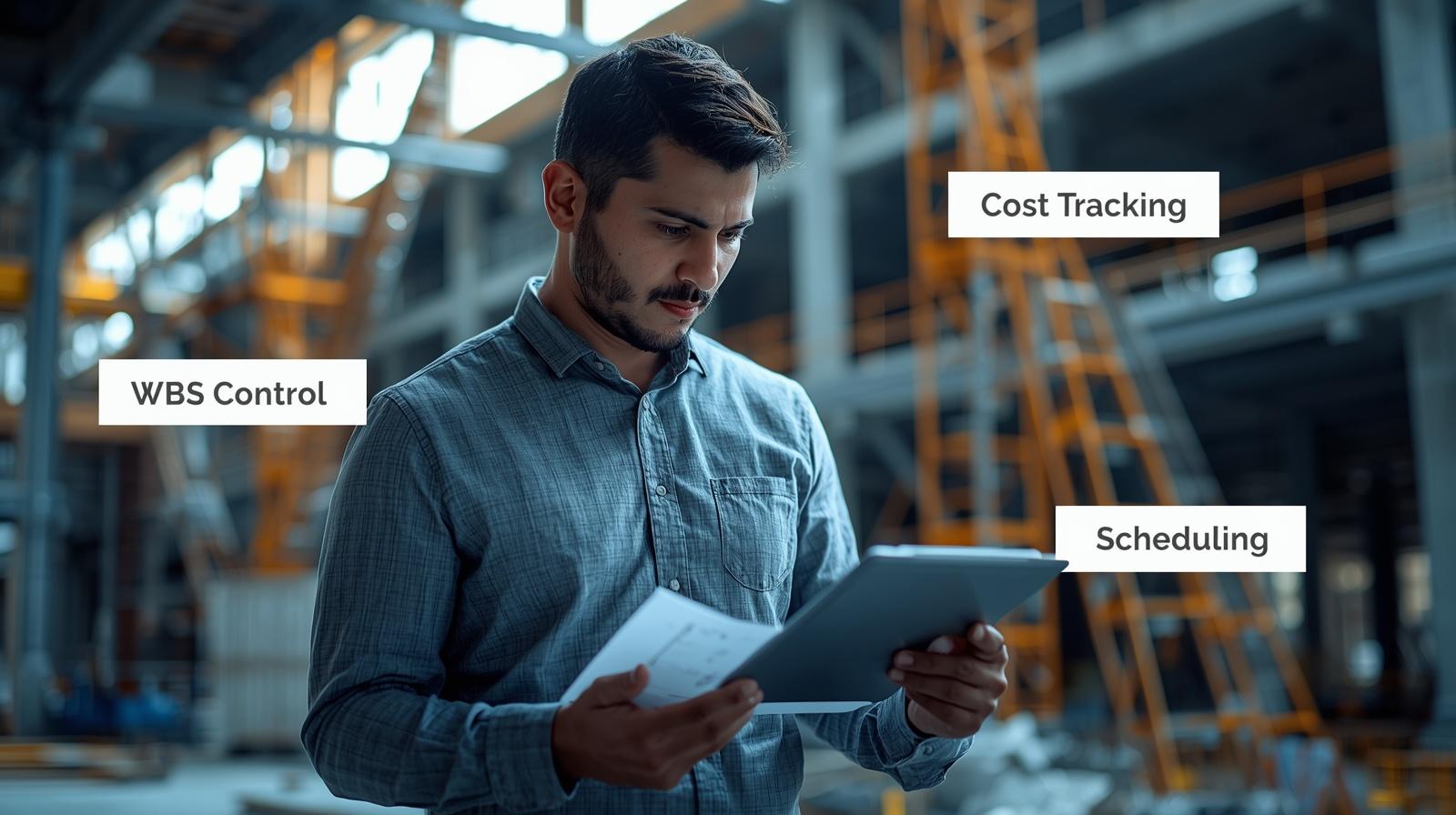
EPC projects in oil and gas are not standard construction projects. They involve a 7-phase lifecycle concept and feasibility, FEED (Front-End Engineering Design), detailed engineering, procurement, construction, commissioning, and handover where each phase generates thousands of interdependent deliverables, and any misalignment cascades downstream.
Key complexity drivers include:
- Massive document volumes A single refinery EPC project can generate 500,000+ engineering documents including P&IDs, equipment datasheets, drawings, specifications, and inspection reports
- Multi-party coordination Dozens of subcontractors, equipment vendors, third-party inspectors, and client representatives all operating simultaneously
- Regulatory and HSE compliance Stringent documentation requirements for HSE, HAZOP, and permit-to-work processes
- Asset handover At project close, all asset data, maintenance documentation, and as-built drawings must transfer cleanly to operations
- Progress measurement complexity Earned Value Management (EVM) across thousands of work packages is nearly impossible to execute without an integrated system
The organizations that execute EPC projects most successfully on time, within budget, with clean handovers are those with a technology backbone that connects engineering, procurement, construction, finance, and asset management in a single platform.
How Does SAP PS Power EPC Project Planning and Control?
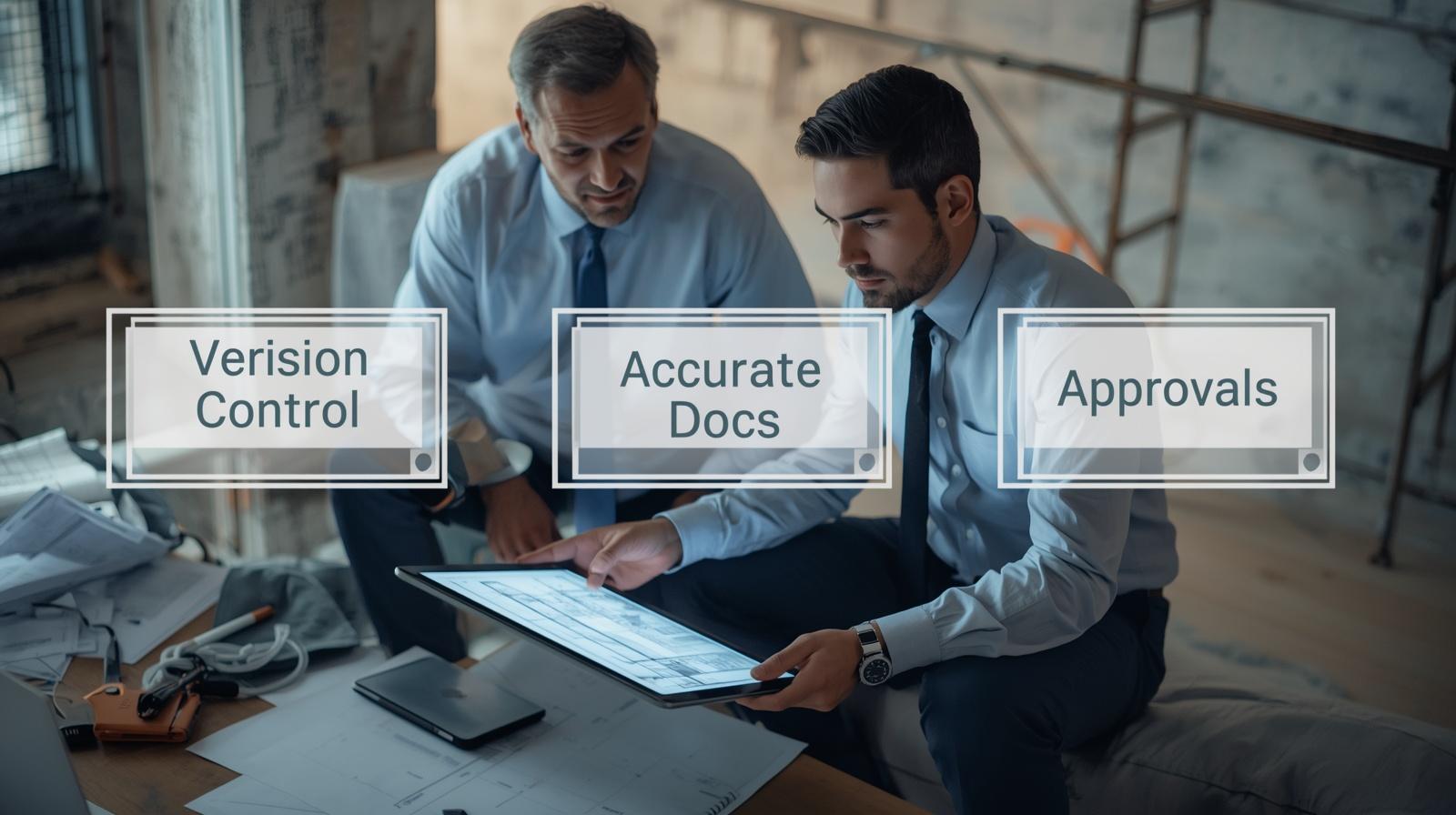
SAP Project System (PS) is the core execution engine for EPC project management within SAP S/4HANA. It provides a structured framework Work Breakdown Structures (WBS), network activities, and milestones that maps directly to the EPC lifecycle.
For oil and gas EPC projects, SAP PS delivers:
- WBS-based cost control Each WBS element captures budgeted, committed, and actual costs in real time, giving project controllers a live view of cost performance against the contract baseline
- Network scheduling Activity networks with dependencies allow project teams to model critical path, float, and schedule risk without leaving the SAP environment
- Progress-based billing SAP PS supports milestone and percentage-completion-based billing, aligning revenue recognition with IFRS 15 requirements and contractual milestone structures
- Integration with SAP MM and SAP PP Procurement requisitions triggered from WBS elements connect directly to materials management, ensuring purchased items are tracked against the project structure from order to delivery
- SAP Fiori dashboards for real-time monitoring Project managers access live cost, schedule, and resource data through Fiori apps without requiring ABAP or technical training
SAP EPPM (Enterprise Portfolio and Project Management) extends PS with portfolio-level views critical for EPC contractors managing multiple simultaneous projects across different geographies in the GCC.
What Role Does SAP EAM Play in an EPC Project?
Most organizations associate SAP EAM (Enterprise Asset Management) with operations and maintenance but its value in EPC projects begins during the construction phase and becomes decisive at handover.
During construction, SAP EAM enables:
- Asset master data creation Equipment and functional location records are built and validated during construction, not after handover. This eliminates the data migration scrambles that delay operational readiness
- Construction punch list management Outstanding items are tracked against assets, not just generic project tasks, making close-out more structured
- Inspection lot and quality notifications SAP QM integration allows inspections to be logged against specific assets throughout construction
At handover, the impact of well-implemented SAP EAM is measurable. According to
For the client-operator receiving the completed facility, inheriting a fully populated SAP EAM plant model complete with maintenance strategies, spare parts lists, and inspection plans is the difference between a 90-day operational readiness programme and a 12-month one.

How Does SAP Document Management Solve Engineering Document Control?
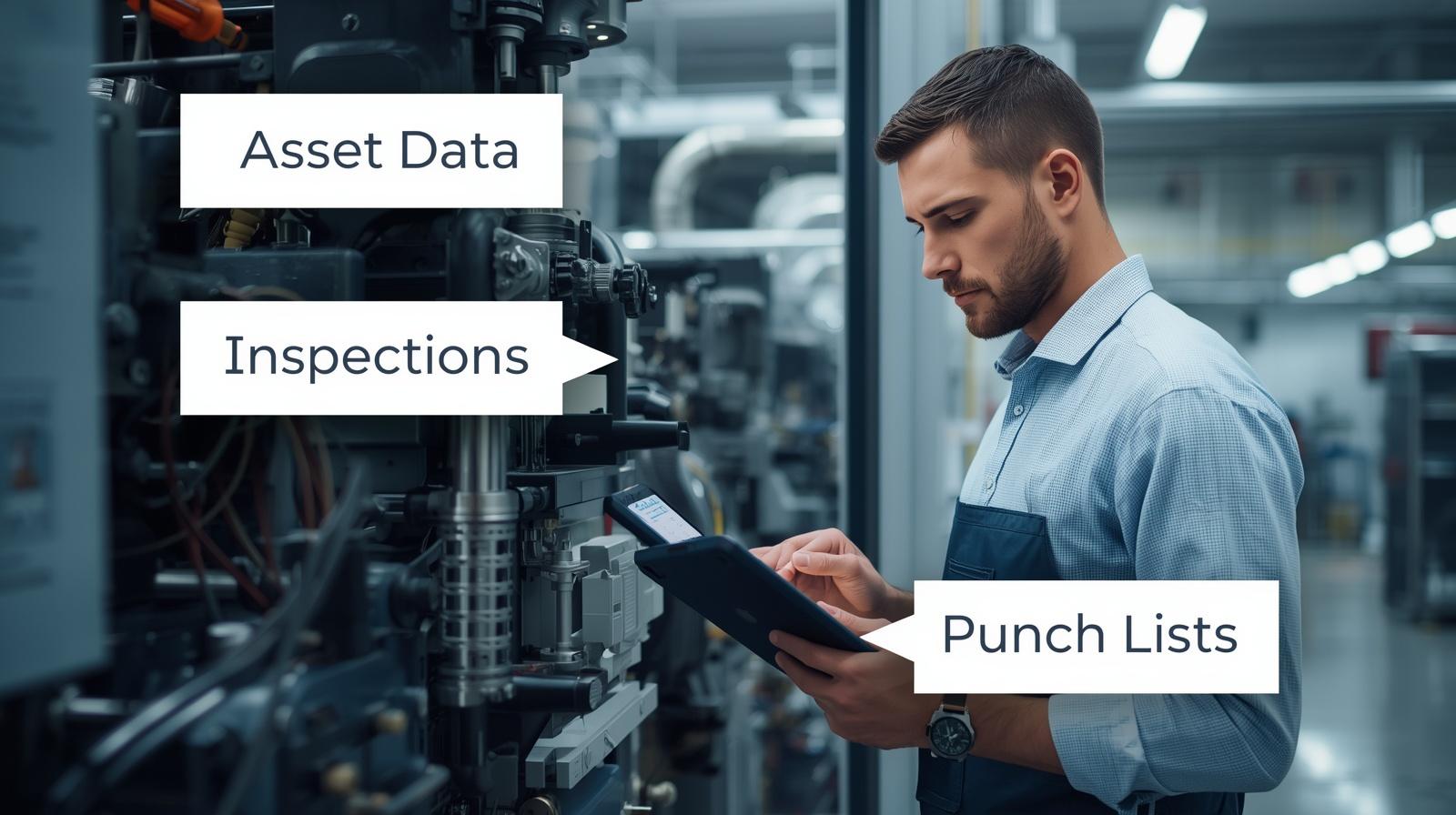
Document control in EPC projects is where projects most frequently break down. Transmittals are lost. Vendors submit revised drawings that override client-approved versions. Site teams work from superseded specifications. The consequences range from costly rework to regulatory non-compliance.
SAP Document Management System (DMS), and its extension SAP xECM by OpenText, address this directly with:
- Centralized document repository — All engineering documents — drawings, datasheets, procedures, inspection records, material certificates — stored in a single, access-controlled repository linked directly to SAP business objects (equipment, WBS elements, purchase orders)
- Version control and audit trails — Every document revision is tracked. Superseded versions are archived but accessible. Users always work from the current approved version
- Automated approval workflows — Document transmittal, review, and approval cycles are automated, eliminating the email chains that slow down document control departments on large EPC projects
- Integration with SAP PS and EAM — Documents are linked to WBS elements during execution and to functional locations and equipment records at handover, creating an unbroken digital thread from engineering to operations
- Compliance and regulatory documentation — Standardized processes for HAZOP reports, inspection test plans (ITPs), and as-built documentation ensure regulatory submissions are timely and complete
- For a complete guide on how SAP EDMS works across oil & gas, construction and government enterprises, read our SAP EDMS guide for large enterprises.
SAP BTP Document Management Service extends these capabilities to cloud and hybrid environments, enabling contractors and clients on different systems to collaborate on documents through BTP-hosted workflows — without requiring both parties to be on the same SAP instance.
Looking to implement or optimize this in Dubai or the UAE?
Speak with WMS Middle East certified SAP consultants for a customized architectural and cost assessment.
How Does SAP BTP Enable Digital Progress Monitoring on EPC Sites?
The most transformative shift in EPC project monitoring in 2026 is the move from periodic progress reports to continuous, real-time field data capture — and SAP BTP (Business Technology Platform) is the layer that makes this possible.
SAP BTP-enabled digital services for EPC projects include:
- SAP Fiori mobile apps for field progress reporting — Field engineers capture physical progress percentages, inspection results, and punch list items on mobile devices, feeding directly into SAP PS without paper-based intermediaries
- SAP Service and Asset Manager — Field technicians performing construction-phase inspections and pre-commissioning activities work from SAP-issued work orders, even in offline mode in remote or restricted areas
- SAP Analytics Cloud (SAC) integration — Live project dashboards combining schedule performance, cost performance, procurement status, and document control metrics give PMO leaders a single version of the truth — updated in real time
- IoT and sensor integration via SAP BTP — For facilities with instrumented construction (smart scaffolding, weld tracking, concrete cure monitoring), BTP acts as the integration layer connecting sensor data to the project model
- AI-assisted schedule forecasting — SAP BTP’s AI capabilities can analyse historical project performance patterns to forecast schedule and cost at completion, flagging emerging risks before they become crises
SAP Capabilities Mapped to EPC Project Phases
| EPC Phase | Primary SAP Capability | Key Business Outcome |
|---|---|---|
| FEED & Concept | SAP PS — WBS Setup, Baseline | Approved project structure and cost baseline |
| Detailed Engineering | SAP DMS / xECM by OpenText | Controlled document issue and revision management |
| Procurement | SAP PS + SAP MM integration | PO tracking against WBS, delivery milestone monitoring |
| Construction | SAP PS + SAP EAM + BTP Fiori | Real-time physical progress, asset master data build |
| Pre-commissioning | SAP EAM + SAP QM | Inspection lots, punch lists, and completion certificates |
| Commissioning | SAP EAM + SAP DMS | Work order execution, as-built documentation control |
| Handover to Operations | SAP EAM + SAP DMS | Clean asset handover with complete maintenance strategy |
Why the Middle East EPC Sector Is Accelerating SAP Adoption
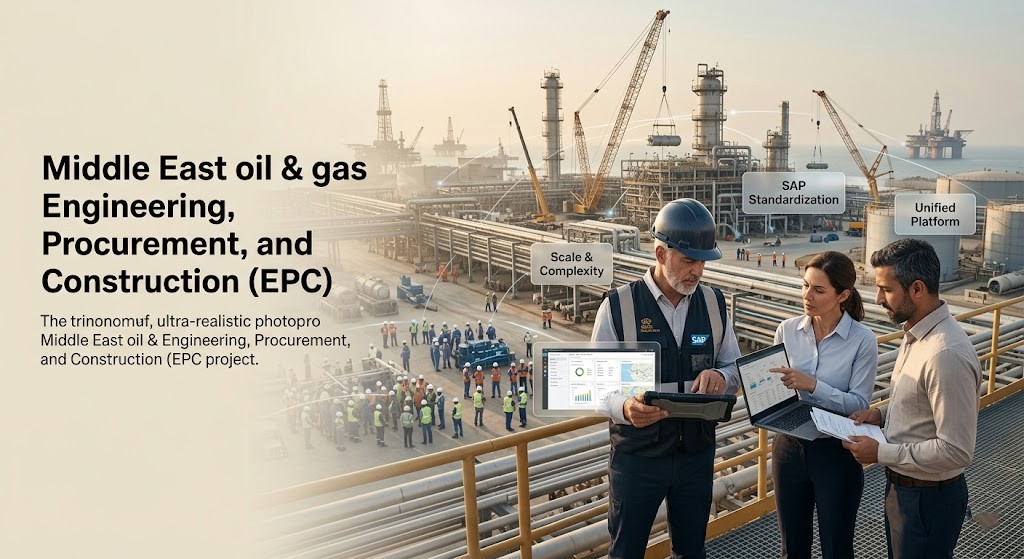
These projects share a common challenge: scale and complexity that manual or fragmented systems cannot manage. Owner-operators and EPC contractors across the region are standardising on SAP S/4HANA as the common data environment — which means EPC contractors who do not have SAP capability are increasingly excluded from major tenders
For project owners, SAP also provides the digital handover capability that modern operations require — a populated asset management system, controlled documentation, and maintenance strategies ready to activate on day one of operations.
The WMS Approach: Implementation Experience in Project-Based Industries

WMS brings deep implementation experience in SAP PS, SAP EAM, and SAP Document Management for project-based industries including oil and gas, construction, and energy infrastructure across the Middle East. Our approach recognizes that EPC projects are not generic SAP implementations — they require deep understanding of earned value methodology, document control workflows, and the operational readiness requirements that govern facility handover.
Connecting SAP EAM asset data built during construction to the live maintenance environment — without data migration crises — is one of the most complex transitions in enterprise systems work. It is also where WMS’s implementation methodology has the most concentrated experience.
Read our WMS client success stories for client examples across oil & gas, manufacturing and construction projects in the UAE and wider GCC.
Talk to an EPC Project Systems Expert
If your organization is evaluating SAP for an upcoming EPC programme, or struggling with progress visibility, document control, or asset handover on a current project, our team can help you understand what a well-configured SAP environment looks like — and what implementation looks like for your specific context.
To ensure seamless project governance, consult with an accredited SAP implementation partner in Dubai with proven regional experience.
Frequently Asked Questions (FAQs)
What SAP modules are most important for EPC project execution in oil and gas?
The core stack is SAP Project System (PS) for project planning, scheduling, and cost control; SAP EAM for asset management from construction through handover; SAP Document Management (DMS or xECM by OpenText) for engineering document control; and SAP BTP for mobile field reporting, analytics, and cloud-based collaboration. These modules are deeply integrated within SAP S/4HANA and work together as a unified project execution environment.sap-ps+1
How does SAP PS support earned value management (EVM) in EPC projects?
SAP PS tracks budgeted cost of work scheduled (BCWS), actual cost of work performed (ACWP), and budgeted cost of work performed (BCWP) across WBS elements and network activities. Physical progress percentages can be entered manually or captured via BTP Fiori apps, feeding directly into EVM calculations. Project controllers can run cost and schedule performance index reports in real time without extracting data to Excel.vsdtechno+1
What is SAP EAM's role during the construction phase of an EPC project — before the asset is operational?
SAP EAM’s value in EPC construction is in building the asset master data — equipment records, functional locations, maintenance strategies, and spare parts lists — while construction is in progress. This eliminates the post-handover data migration effort that typically delays operational readiness. It also enables punch list management and inspection recording against specific assets rather than generic project tasks.
How does SAP xECM by OpenText differ from standard SAP DMS for EPC document control?
SAP DMS (Document Management System) manages structured engineering documents linked to SAP objects. SAP xECM by OpenText extends this to unstructured content — emails, images, scanned documents, and vendor correspondence — and provides more sophisticated content lifecycle management. For large EPC projects handling hundreds of thousands of documents from multiple contractors, xECM provides the enterprise content management layer that standard DMS alone cannot deliver.
Can SAP BTP be used by subcontractors and vendors who are not on SAP?
Yes. SAP BTP-hosted portals and workflows can be accessed by external parties — subcontractors, vendors, inspection agencies — through web browsers without requiring them to have SAP licenses. Document submittals, transmittal tracking, and progress reporting can all be configured as BTP-hosted interactions, making the EPC contractor’s SAP environment the hub while external parties collaborate through lightweight portal access.sap+1
How does SAP handle engineering document transmittals and revision control in EPC projects?
SAP DMS and xECM by OpenText support formal transmittal workflows where documents are issued to defined distribution lists with tracking of receipt acknowledgment. Revision control ensures each document version is uniquely identified. Superseded revisions are archived and accessible for audit purposes but removed from active circulation. Automated alerts notify relevant parties when documents are revised or when responses to transmittals are overdue.
How does SAP support asset handover from an EPC contractor to an owner-operator?
A well-executed SAP EAM implementation during construction produces a fully populated plant model — functional location hierarchy, equipment master records, maintenance task lists, inspection plans, and linked documentation — ready to hand over to the client’s SAP EAM or CMMS environment. When both EPC contractor and owner-operator are on SAP, this handover can be executed through structured data transfer. When they are on different platforms, the SAP environment produces the structured data package required for migration.
What real-time dashboards does SAP provide for EPC project progress monitoring?
SAP Fiori apps provide real-time dashboards for project cost, schedule, procurement, and resource status accessible on any device. SAP Analytics Cloud (SAC) extends this with advanced visualisations including S-curve analysis, earned value dashboards, and multi-project portfolio views. Field progress data entered via BTP mobile apps updates these dashboards in real time, eliminating the weekly reporting lag that characterises traditional EPC progress reporting.sap+1
Is SAP suitable for smaller EPC contractors or only for very large organisations?
SAP S/4HANA scales across project sizes. For mid-market EPC contractors, SAP Business One or SAP S/4HANA Cloud (Public Edition) provides project management, procurement, and financial control capabilities without the full complexity of an enterprise implementation. The right SAP configuration depends on project size, contract structure, client requirements, and whether the contractor is bidding on projects where the owner-operator requires SAP-compatible data handover. An experienced implementation partner like WMS can help determine the right fit.sap

Mahitab Maher
SAP professional specializing in SAP products, helping companies turn complex processes into smooth, scalable operations.
WMS is an SAP Gold Partner with deep implementation experience across oil & gas, energy, and project-based industries in the Middle East. Our teams in the UAE, Saudi Arabia, and Egypt bring both SAP technical expertise and industry-specific knowledge to every engagement.


