
Last Updated 02/09/2026
Executive Summary
- Strategic Overview: Comprehensive guidance on why project-based industries need specialized erp: lessons from energy and construction sectors tailored for Middle East and GCC enterprises.
- Key Advantage: Eliminates departmental silos, standardizes reporting, and accelerates operational agility.
- Next Step: Consult with certified WMS Middle East SAP experts for tailored architecture sizing and cost estimation.
Why Generic ERP Fails Project-Based Businesses
A project-based business does not run on repeatable inventory cycles alone. It runs on contracts, milestones, change orders, subcontractors, equipment, progress billing, and long project lifecycles. That means a standard ERP built for steady-state operations often breaks down when it is asked to manage real project complexity.
In energy and construction, one delayed delivery can affect procurement, labor schedules, cash flow, and contractual claims. When teams are forced to manage these realities in spreadsheets or disconnected tools, margin control weakens fast. That is why project-based industries need specialized ERP systems designed around the project lifecycle from bid to handover.
To evaluate technical partner qualifications and service levels, review our CFO checklist for choosing an SAP Gold Partner in Dubai.

What Makes Project-Based Industries Different?
Project-based industries share a few common traits that make them harder to manage than routine operations:
- Every project is unique.
- Revenue is tied to milestones or progress billing.
- Material demand changes with design revisions and site conditions.
- Labor and equipment move across multiple job sites.
- Subcontractor coordination affects both cost and schedule.
- Claims, variations, and retention drive financial outcomes.
These pressures are visible in construction and EPC environments, where real-time project information is essential to keep budgets, cash flow, and delivery aligned. Cloud-based ERP adoption is rising because it supports collaboration, mobility, and real-time control across dispersed teams.
Why Specialized ERP Matters
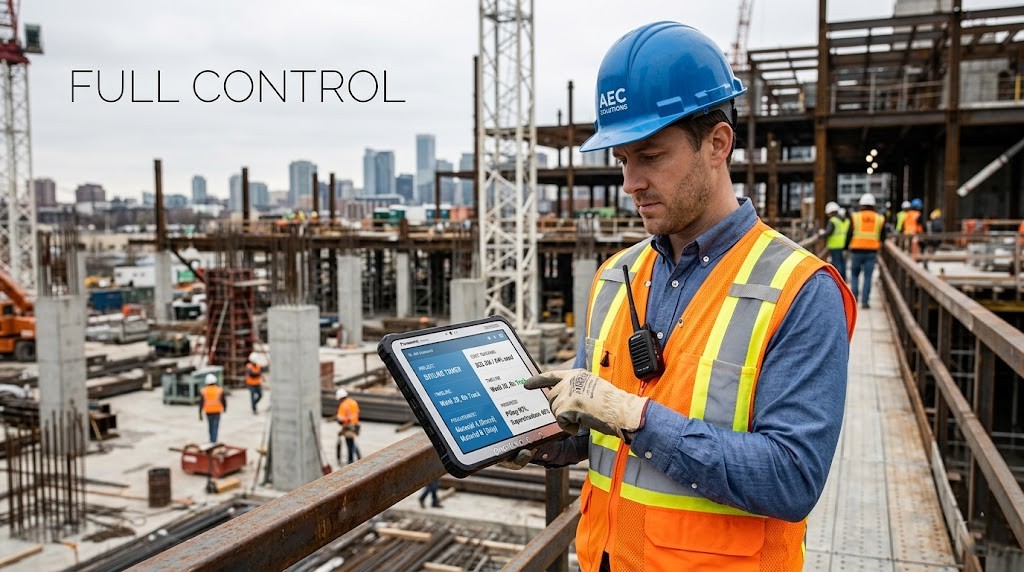
A specialized ERP gives project-based firms a single operational backbone for cost, schedule, procurement, billing, and resource management. It is not just accounting software with a few project fields added. It is a system designed to follow the life of a project end to end.
| Project Need | Generic ERP | Specialized ERP |
|---|---|---|
| Project budgeting | Limited | WBS- and milestone-based |
| Cost tracking | Basic financial view | Committed, actual, and forecast cost by project |
| Procurement | Central purchasing | Project-linked purchasing and delivery control |
| Billing | Invoice-centric | Progress, milestone, and retention billing |
| Progress monitoring | Manual reporting | Real-time field and site updates |
| Change management | Weak | Variation and claim tracking |
SAP PS, construction-oriented ERP capabilities, and project-based scheduling tools are increasingly used because they give managers the control standard ERP systems cannot deliver.
How SAP Supports Project-Based Operations
SAP Project System (PS) is central to managing project lifecycles in engineering and construction. It provides Work Breakdown Structures, network activities, milestones, and cost control that align directly with project delivery phases.
For energy and construction firms, SAP also connects to finance, materials, asset management, and workforce processes. That means project teams can manage procurement, track actuals, and monitor schedule performance without losing financial visibility. This is especially important in sectors where one project can involve thousands of line items, multiple subcontractors, and strict handover requirements.
For a complete technical breakdown of how SAP PS, EAM and Document Management work together across the full EPC lifecycle — from FEED to handover — read our detailed guide on SAP for oil and gas EPC project execution.
What Energy and Construction Teach Us
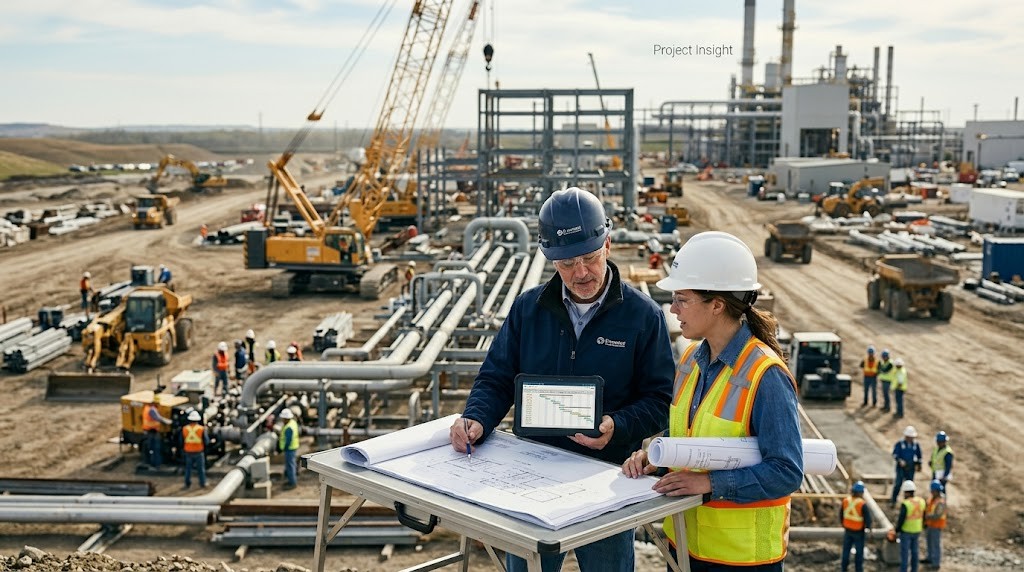
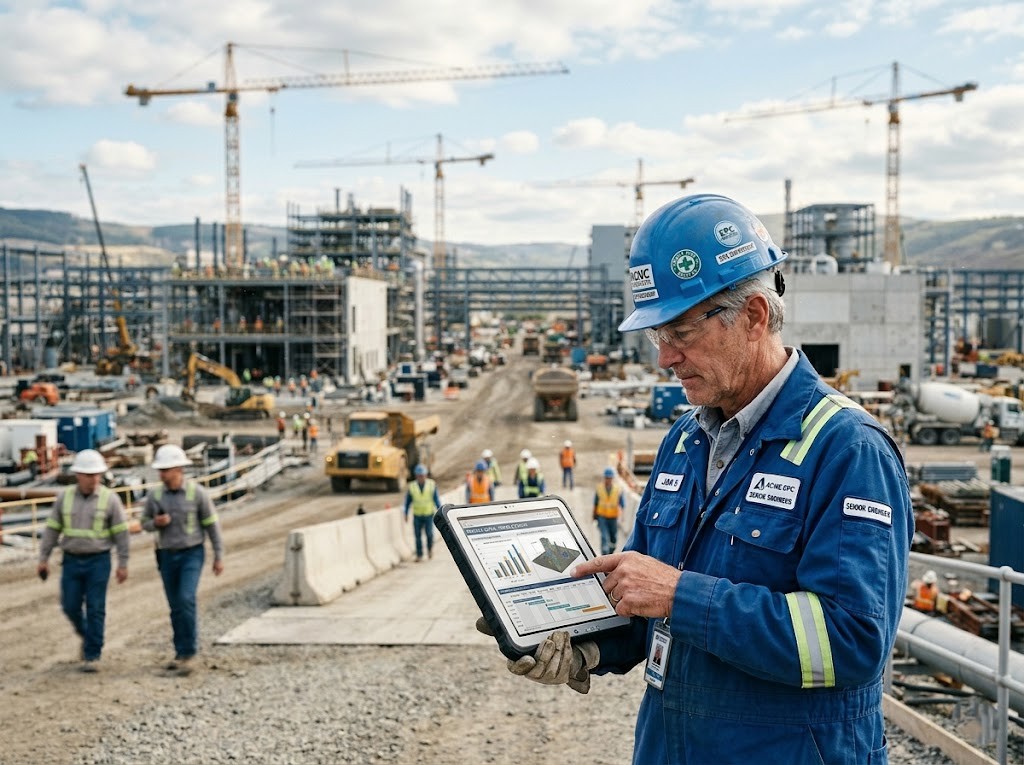
Energy and construction are useful examples because they show the consequences of poor system fit very clearly. These sectors deal with long timelines, complex delivery chains, equipment-intensive work, and contractual billing structures that change over time.
The lessons are consistent:
- Cost control must be project-specific.
- Scheduling must reflect dependencies, not just tasks.
- Progress must be visible from site to finance.
- Documentation must stay linked to the project record. This is exactly what SAP EDMS and document management enables — linking engineering documents, drawings and inspection records directly to SAP project structures.
- Resource allocation must move with demand, not fixed hierarchy.
Construction ERP market growth reflects this need for integrated solutions that support project management, procurement, compliance, and field collaboration.
Looking to implement or optimize this in Dubai or the UAE?
Speak with WMS Middle East certified SAP consultants for a customized architectural and cost assessment.
What Capabilities Should a Project ERP Include?
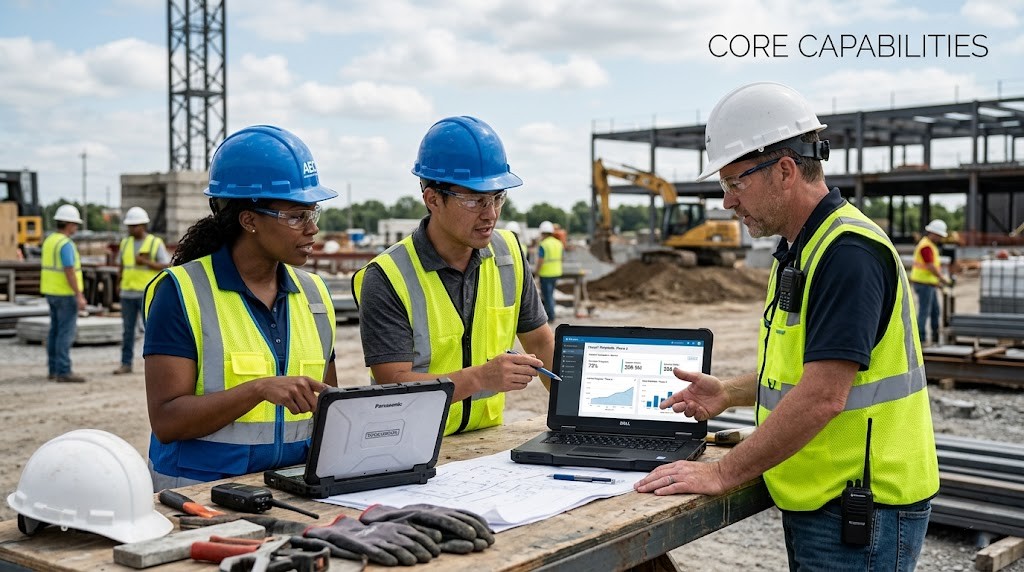
| Capability | Why It Matters | Business Outcome |
|---|---|---|
| Project planning and WBS | Breaks work into manageable parts | Better accountability |
| Procurement integration | Tracks ordered and received materials | Fewer delays |
| Cost control | Compares budget, committed, and actual | Margin protection |
| Progress tracking | Captures site updates and completion % | Better forecasting |
| Change management | Tracks variations and claims | Stronger commercial control |
| Billing and retention | Aligns revenue with project milestones | Improved cash flow |
| Mobile access | Supports field reporting | Faster data capture |
These capabilities are the difference between an ERP that records what happened and one that helps manage what will happen next.
Why WMS Approach Matters
WMS understands that project-based industries need more than implementation of a standard software package. The real challenge is configuring processes around how projects are won, delivered, and closed out.
That means aligning SAP project structures, field updates, procurement, billing, and reporting with actual business practices in energy, construction, and EPC environments. When that happens, ERP becomes a control system rather than just a reporting tool.
To ensure seamless project governance, consult with an accredited SAP implementation partner in Dubai with proven regional experience.
Moving Toward Better Project Control
If a business is managing projects through disconnected systems, the symptoms usually show up in delayed billing, unclear progress, weak margin visibility, and too many status meetings. Specialized ERP reduces that friction by creating one source of truth for the full project lifecycle. For the broader digital transformation context, read how Middle East enterprises are competing globally with SAP

Frequently Asked Questions (FAQs)
Why do project-based industries need specialized ERP?
Because project-based businesses rely on milestones, variations, resource shifts, and progress billing. A generic ERP often cannot handle those dynamics with enough precision.
Is SAP suitable for construction and energy projects?
Yes. SAP PS is built for complex project structures and integrates with finance, materials, and asset management, which makes it suitable for construction, energy, and EPC environments.
What is the biggest risk of using a generic ERP in project businesses?
The biggest risk is losing control of cost and schedule at project level, especially when teams rely on spreadsheets for change orders, billing, and progress reporting.
What project functions should ERP support?
It should support project planning, procurement, cost control, billing, progress tracking, subcontractor coordination, and change management.
How does ERP help with cash flow?
By linking billing to milestones, retention, and approved progress, ERP gives finance teams a clearer view of what can be invoiced and when.
Why is mobile access important in project ERP?
Because field teams need to update progress, capture issues, and report status from job sites without waiting for office entry. Mobile access improves reporting speed and accuracy.
Does project ERP help with claims and variations?
Yes. Specialized ERP can track change orders, revisions, and commercial impacts so project teams can manage variations more effectively.
How does SAP PS improve project visibility?
SAP PS uses structured project elements and milestones to connect work, cost, and schedule into one framework that managers can monitor in real time.
Can project ERP work across multiple job sites?
Yes. Cloud ERP is increasingly used because it supports collaboration across distributed sites and project teams.
What should a company look for when choosing ERP for project work?
It should look for project budgeting, procurement tracking, progress monitoring, billing support, resource planning, and integration with finance and field operations.

Mahitab Maher
SAP professional specializing in SAP products, helping companies turn complex processes into smooth, scalable operations.


