
Last Updated 02/09/2026
Executive Summary
- Strategic Overview: Comprehensive guidance on enabling digital government services in the gcc through smart apps and web platforms tailored for Middle East and GCC enterprises.
- Key Advantage: Eliminates departmental silos, standardizes reporting, and accelerates operational agility.
- Next Step: Consult with certified WMS Middle East SAP experts for tailored architecture sizing and cost estimation.
The Service Problem Gulf Governments Are Solving
Citizens and residents no longer want to queue for simple services, visit offices for routine paperwork, or chase status updates across multiple departments. They expect government interactions to feel as simple as a banking app, an e-commerce site, or a delivery tracker.
That is why the Gulf region is moving rapidly toward unified digital services, mobile-first experiences, and web platforms that bring public services into one place. Governments across the GCC are already rolling out large-scale digital platforms, and the shift is being driven by high smartphone usage, strong connectivity, and national digital strategies focused on reducing bureaucracy and improving service delivery.
To evaluate technical partner qualifications and service levels, review our CFO checklist for choosing an SAP Gold Partner in Dubai.

Why Mobile and Web Must Work Together

The best government digital experiences do not choose between mobile and web. They use both channels for different user needs.
Mobile apps are ideal for quick actions, notifications, identity-driven access, and services used frequently on the move. Web portals are better for complex transactions, information-heavy services, document uploads, and broader accessibility across devices. In the Gulf region, successful digital government programmes use both channels to create a seamless citizen journey.
| Channel | Best Use | Key Business Outcome |
|---|---|---|
| Mobile App | Fast access, notifications, identity login, status tracking | Convenience and engagement |
| Web Portal | Detailed forms, long transactions, document-heavy services | Accessibility and completeness |
| Unified Platform | Cross-department services, one login, shared status tracking | Lower friction and stronger adoption |
Looking to implement or optimize this in Dubai or the UAE?
Speak with WMS Middle East certified SAP consultants for a customized architectural and cost assessment.
What Makes Smart Government Different
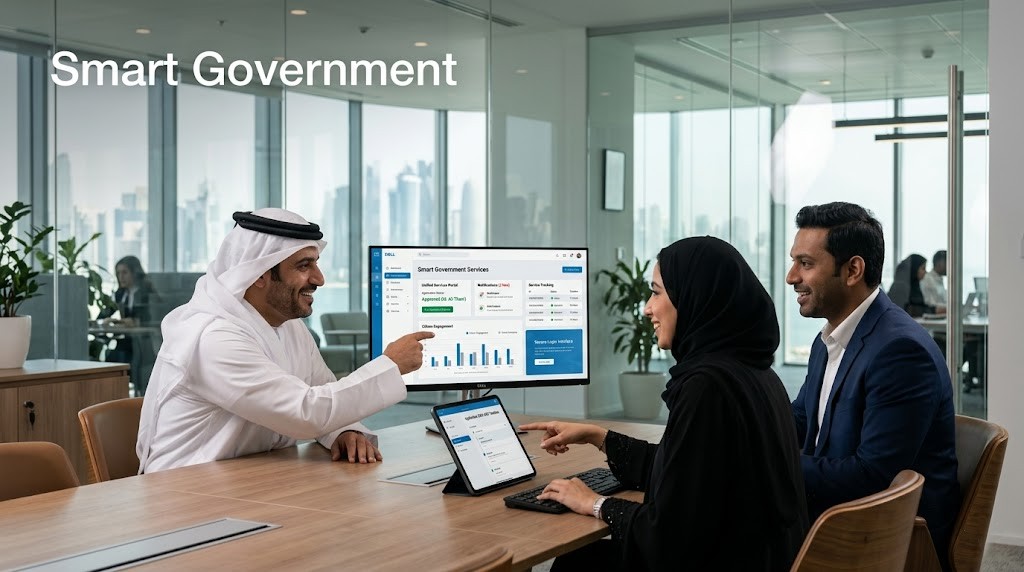
Smart government is not just digitized paperwork. It is a rethinking of how public services are designed, delivered, and measured.
A modern smart government platform should be able to:
- Authenticate users securely through national digital identity.
- Present services in Arabic and English with proper right-to-left support.
- Send real-time alerts and service updates.
- Allow citizens to track requests from submission to approval.
- Connect multiple agencies through a unified digital front door.
The Gulf region has an advantage here because the infrastructure already supports it. High smartphone penetration, strong internet access, and government investment in digital identity and cloud platforms make mobile-first public service delivery not only possible, but expected.
What Technology Powers These Services?
For government IT leaders, the main question is not whether to build an app or a website. It is how to build a secure, scalable, maintainable service layer behind both.
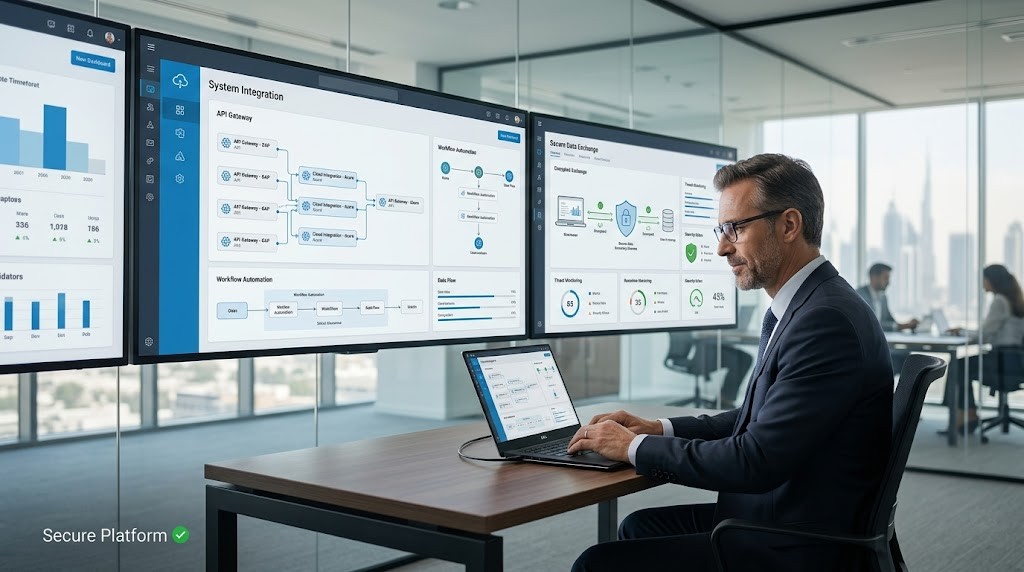
SAP BTP is increasingly relevant here because it can sit behind citizen-facing apps and web portals, providing integration, workflow automation, APIs, and reusable digital services. SAP BTP also supports secure development patterns for custom government applications and can connect front-end experiences to backend processes across departments
This matters for public sector teams that need:
- Centralized workflow orchestration.
- Secure data exchange across systems.
- Faster delivery of new services.
- A common platform for mobile and web enhancements.
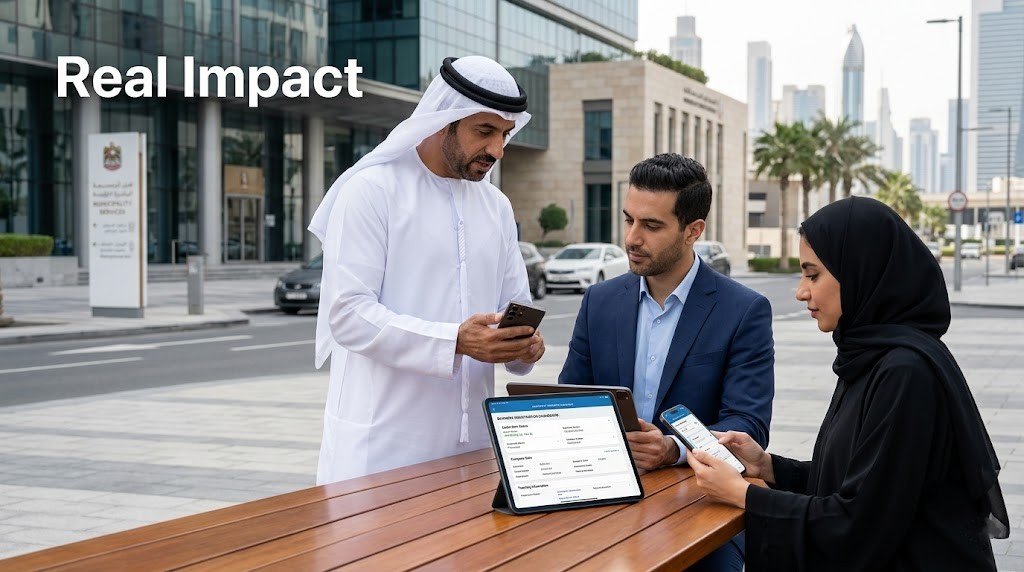
Where the Impact Shows Up
Smart mobile apps and web solutions create value across multiple government service areas:
- Permits and licensing: Faster applications, status tracking, and digital approvals.
- Identity and access: Secure login using national digital identity systems.
- Public benefits: Easier eligibility checks and benefit tracking.
- Municipal services: Reporting issues, request tracking, location-based services.
- Business services: Business registration, renewals, and regulatory submissions.
- Social services: Unified access to multiple welfare and family support services.
These are exactly the kinds of services Gulf governments are consolidating into unified portals and mobile apps to reduce bureaucracy and improve citizen satisfaction.
Implementation Priorities for Government Teams
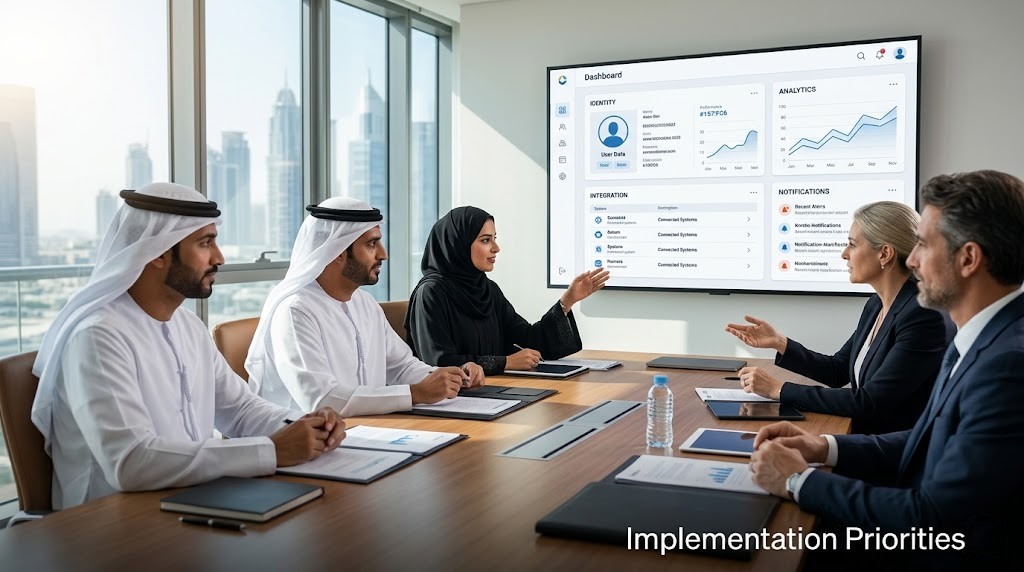
| Priority | Why It Matters | Outcome |
|---|---|---|
| Secure digital identity | Protects access and simplifies login | Trusted service access |
| Arabic and English UX | Supports all residents and citizens | Higher adoption |
| Real-time notifications | Keeps users informed | Fewer support calls |
| Service status tracking | Increases transparency | Better citizen trust |
| API integration | Connects agencies and systems | Unified service delivery |
| Analytics dashboards | Helps leaders monitor performance | Better governance |
A strong implementation also needs accessibility, mobile responsiveness, and service design that starts with the citizen journey rather than internal departmental silos. That is what separates a digital interface from a true digital government platform. Government leaders use.SAP Analytics Cloud to monitor service performance dashboards in real time — from permit approval rates to citizen satisfaction scores.
Why WMS Approach Matters
WMS brings a practical implementation perspective to government mobile and web transformation. The focus is not only on design and technology, but also on service architecture, backend integration, and how to make public-facing platforms work across real government processes.
That is important because a polished interface alone does not solve service delivery. The front end must connect to identity, approvals, notifications, records, and reporting — otherwise the user experience stops at the surface.
Moving Toward Better Public Services
For government IT and digital teams in the Gulf, the opportunity is clear: create citizen experiences that are faster, simpler, and more unified across channels. Mobile apps handle the frequent, urgent, and on-the-go interactions. Web solutions handle the deeper, more detailed services. Together, they form the backbone of a modern smart government.
To ensure seamless project governance, consult with an accredited SAP implementation partner in Dubai with proven regional experience.

Frequently Asked Questions (FAQs)
Why are Gulf governments investing so heavily in mobile apps?
Because citizens and residents expect services to be fast, convenient, and available on the devices they use most. High smartphone adoption and strong digital infrastructure make mobile a natural service channel in the GCC.
Is a mobile app better than a website for government services?
Not always. Mobile apps are better for frequent, identity-based, and notification-heavy interactions, while websites are better for complex forms, content-heavy services, and broader accessibility. The strongest government experiences use both together.
What makes a government app “smart”?
A smart government app is secure, connected, multilingual, and able to track service status in real time. It should also integrate with backend systems so the user sees more than just a digital form.
How does SAP BTP help government digital services?
SAP BTP provides the integration, workflow automation, and application development layer needed to connect citizen-facing apps to backend government processes. It supports reusable services and faster delivery of new digital solutions.
Why is Arabic and English support important?
Because government platforms in the Gulf serve both citizens and large expatriate populations. Proper bilingual UX improves accessibility, trust, and adoption.
What services benefit most from mobile delivery?
Services that need speed, notifications, identity verification, or status tracking benefit most — including permits, renewals, request submissions, public benefits, and municipal service requests.
Can one platform serve multiple government departments?
Yes. Unified digital service platforms are becoming common in the GCC because they reduce duplication and make it easier for citizens to complete related tasks in one journey.
What role does analytics play in government apps?
Analytics helps public sector leaders measure service demand, completion rates, bottlenecks, and citizen satisfaction. That makes it easier to improve service quality and prioritize upgrades.
How should a government team start a digital service project?
Start with one high-impact service, define the user journey, confirm integration points, and design the mobile and web experience around real citizen needs rather than internal structure.
Why should government teams work with an implementation partner?
Because successful government digital services require more than front-end design. They need integration, governance, security, multilingual UX, and platform strategy, all aligned to real public-sector workflows.

Mahitab Maher
SAP professional specializing in SAP products, helping companies turn complex processes into smooth, scalable operations.


