
Last Updated 01/09/2026
Executive Summary
- Strategic Overview: Comprehensive guidance on how can data and sap transform enterprise risk management? tailored for Middle East and GCC enterprises.
- Key Advantage: Eliminates departmental silos, standardizes reporting, and accelerates operational agility.
- Next Step: Consult with certified WMS Middle East SAP experts for tailored architecture sizing and cost estimation.
How Can Data and SAP Transform Enterprise Risk Management?
Every enterprise faces risk. The question is not whether risk exists it is whether your organisation has the visibility to see it coming, the processes to respond before it escalates, and the controls to demonstrate accountability when regulators or boards ask for evidence.
For most enterprises, the honest answer is that risk management is still largely reactive. Risks are identified after they materialise. Assessments are done periodically quarterly, annually not continuously. Risk registers live in spreadsheets that are updated manually, owned by a small compliance team, and rarely connected to the operational reality of the business. When a risk event occurs, the organisation scrambles to document what went wrong rather than presenting a structured, pre-existing response.
In 2026, this approach is no longer defensible. Enterprise risk management trends reflect a decisive shift away from periodic, reactive assessments toward continuous intelligence driven by data, AI, and automation. Risks now emerge and spread at high speed regulatory demands are intensifying, geopolitical risk has risen to board-level strategy, and leadership accountability has expanded significantly. SAP Risk Management, as part of the broader SAP GRC suite, provides the integrated data layer and workflow infrastructure to build ERM programmes that actually keep pace with this environment.
Enterprises looking to fast-track their cloud adoption can leverage our 16-week SAP cloud migration roadmap for streamlined go-live execution.
Who Is This Guide For?
- Chief Risk Officers (CROs) building or maturing enterprise risk frameworks.
- CFOs responsible for financial risk visibility and board-level risk reporting.
- Internal Audit Heads integrating risk management with audit planning and continuous monitoring.
- CIOs evaluating SAP GRC or SAP S/4HANA as the platform for ERM implementation.
- Compliance Officers in regulated industries banking, manufacturing, energy, pharma where risk management is both an operational and regulatory obligation.
Whether your organisation is building an ERM programme for the first time or seeking to mature a fragmented, manual process into a data-driven function, this guide explains how SAP enables that transformation.

What Is Enterprise Risk Management and Why Does It Matter Now?
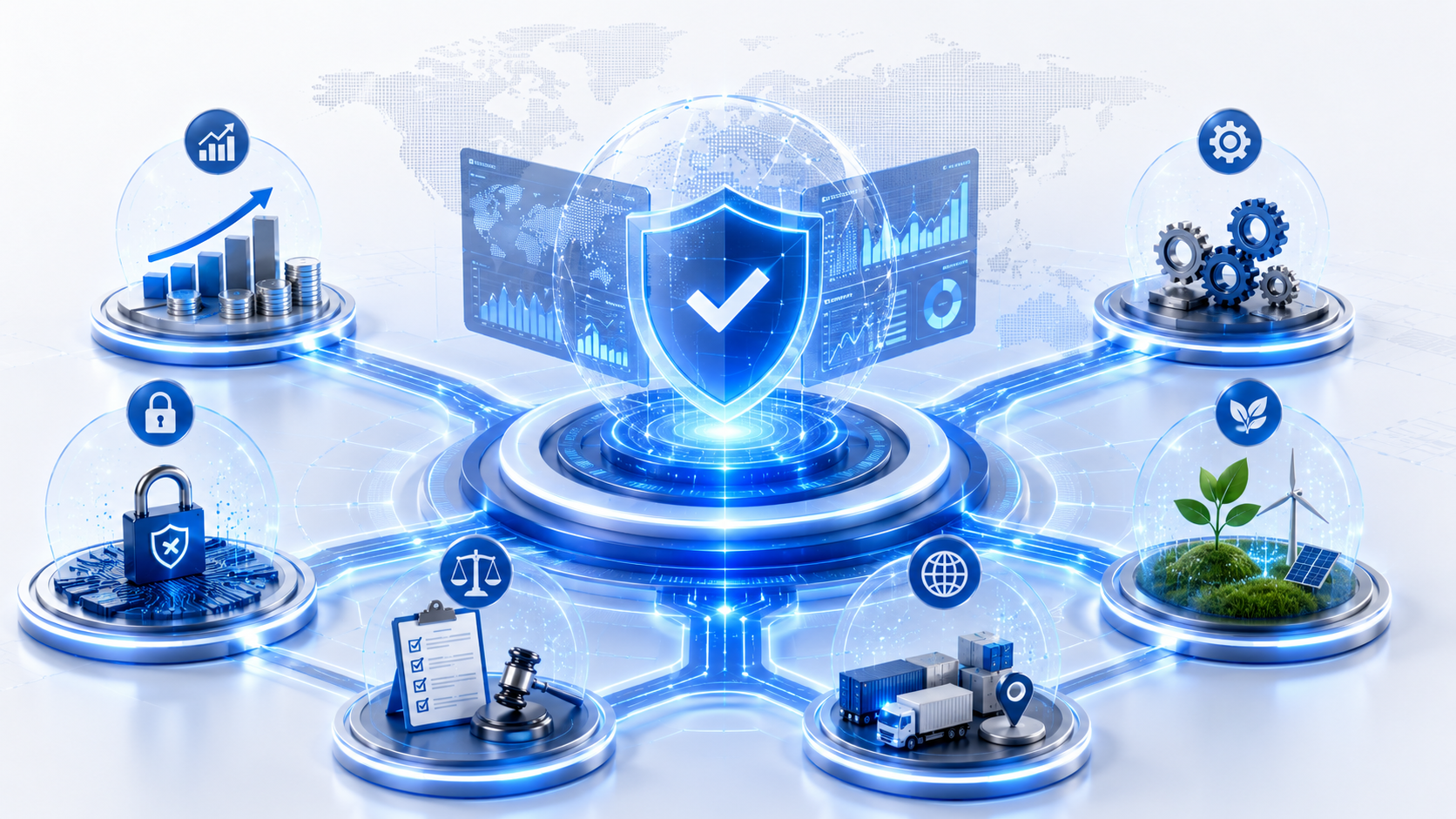
Enterprise Risk Management (ERM) is the process by which an organisation systematically identifies, assesses, monitors, and responds to the risks that could prevent it from achieving its strategic objectives. Unlike siloed, departmental risk management where finance tracks financial risks, IT tracks cybersecurity risks, and operations tracks supply chain risks independently ERM provides a unified view of the organisation’s full risk landscape.
The case for ERM has never been stronger than in 2026. Several interconnected forces have raised the stakes:
| Risk Driver | What It Means for Enterprises | Why Manual ERM Cannot Keep Up |
|---|---|---|
| Regulatory Intensification | ZATCA, GST, e-invoicing, GDPR-equivalent mandates compliance risk is now operational risk. | Regulatory changes emerge faster than manual monitoring processes can track. |
| AI-Accelerated Threats | Cyberattacks, fraud, and supply chain disruptions now evolve faster than traditional annual assessments. | Risk intelligence must be continuous and real-time rather than periodic. |
| Geopolitical Volatility | Supply chain disruptions, currency fluctuations, and sanctions create enterprise-wide risk events. | Scenario planning requires live business data and predictive modelling capabilities. |
| Board Accountability | Boards and audit committees expect documented, auditable evidence of proactive risk management. | Spreadsheet-based risk registers cannot satisfy board-level governance and scrutiny. |
| ESG & Sustainability | Climate, social, and governance risks have become measurable and reportable business categories. | New risk dimensions require integrated, scalable, and data-driven ERM infrastructure. |
How Does SAP Risk Management Work?
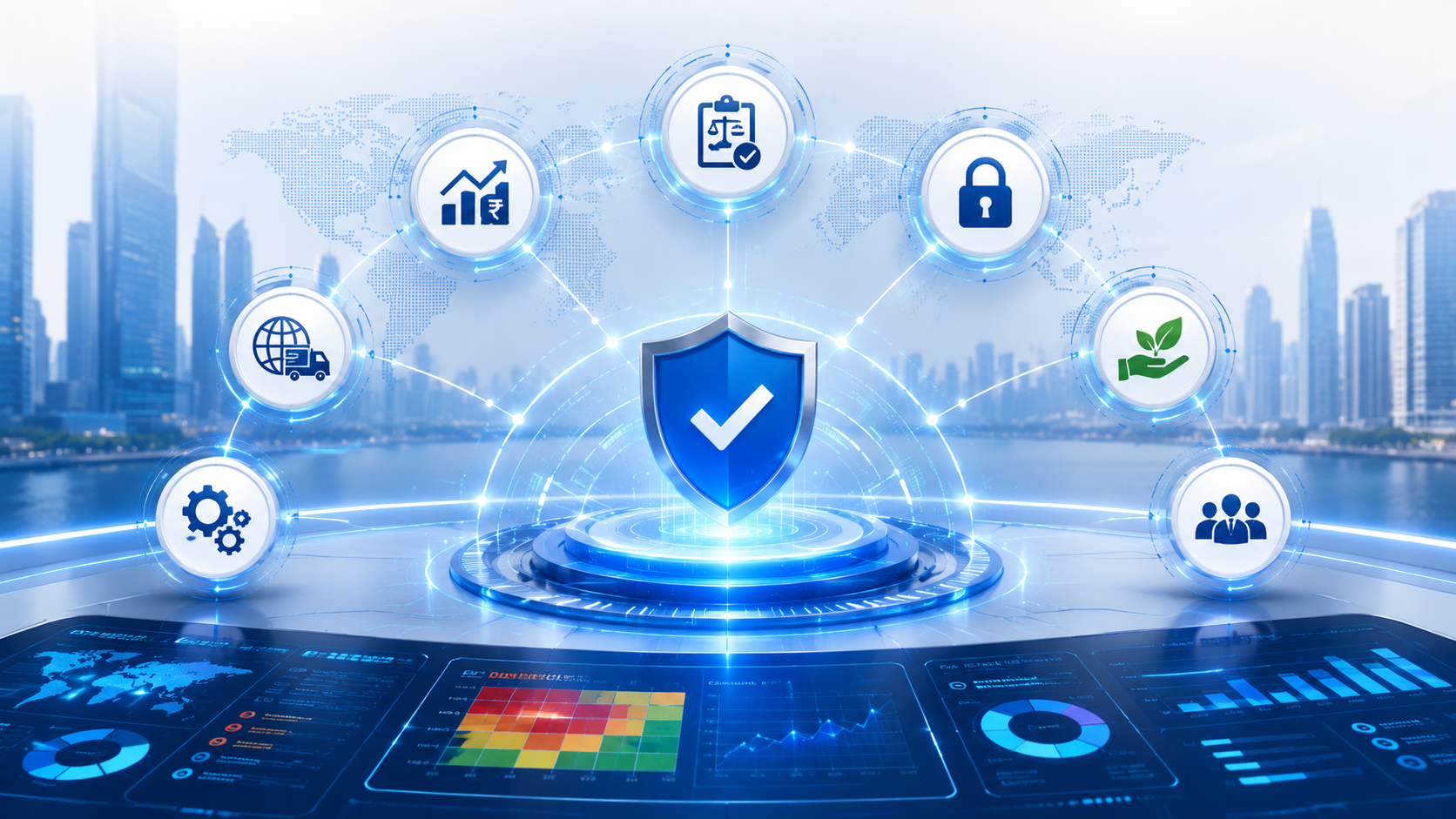
SAP Risk Management is an AI-powered ERM application within the SAP GRC suite, designed to provide real-time risk insights and enhanced organisational resilience. It operates natively within the SAP ecosystem which means it draws on the same transactional data, business processes, and organisational hierarchies that your ERP uses, rather than requiring manual data feeds or separate system maintenance.
The functional architecture of SAP Risk Management follows the standard ERM lifecycle:
Risk Strategy and Planning
Before risks can be managed, the organisation must define its risk universe the scope of activities, business units, and strategic objectives that risk management will cover. SAP Risk Management allows organisations to establish their risk hierarchy, define risk appetite and tolerance thresholds by category, assign risk ownership to specific roles, and create risk libraries that provide structured taxonomy for consistent identification and reporting.
Risk Identification
Risk identification in SAP Risk Management goes beyond simple documentation. Risk owners can propose and document risks through structured workflows. Survey tools allow broader organisational input enabling risks to surface from operational teams, not just the central risk function. Root cause analysis links identified risks to the specific business activities and process failures that generate them, creating a structured map of the organisation’s exposure.
Risk Assessment and Analysis
SAP Risk Management supports both qualitative and quantitative risk assessment. Risk owners assess likelihood and impact using configurable scoring models. For organisations requiring advanced quantitative analysis, the module supports Monte Carlo simulations allowing risk teams to model probabilistic outcomes across multiple scenarios. Risk assessments can be sent via workflow to subject matter experts who complete their assessments independently, before results are consolidated and reviewed by the risk owner. SAP GRC 2026 introduces a new flexible risk analysis type that supports assessment across multiple horizons with customisable parameters.
What Are Key Risk Indicators and Why Do They Matter?
Key Risk Indicators (KRIs) are metrics that signal when a risk is approaching or exceeding acceptable thresholds enabling proactive response before a risk event materialises. SAP Risk Management’s HANA-based KRI framework allows organisations to define KRIs connected to live SAP transactional data, with automated alerts triggered when thresholds are breached. SAP GRC 2026 enhances this further with AI-driven KRI design automatically identifying relevant data sources and suggesting KRI configurations based on the organisation’s risk profile. This transforms risk monitoring from a manual, calendar-driven process to a continuous, data-driven function.

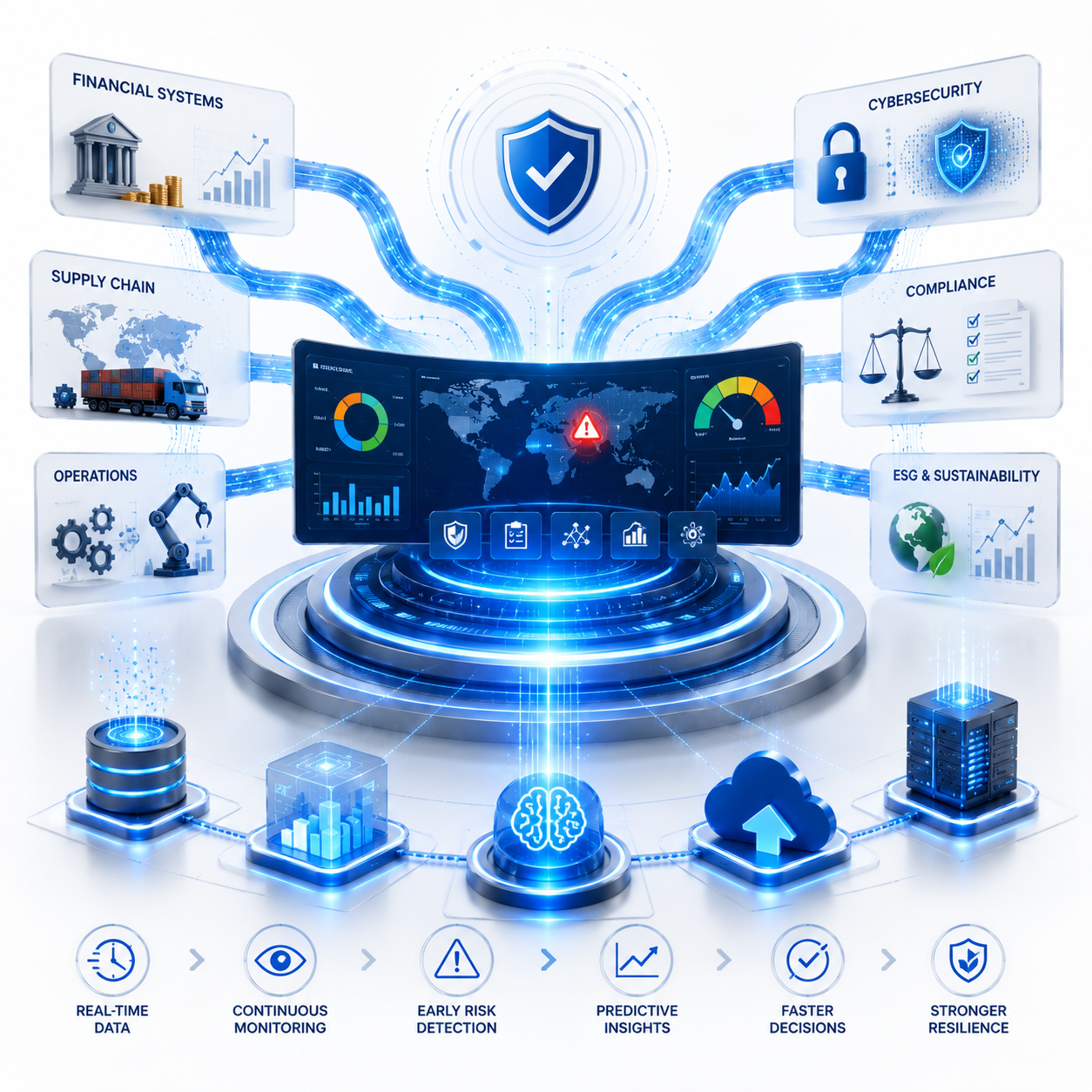
How Does Real-Time Data Transform Enterprise Risk Management?
The most important shift in modern ERM is not the technology itself it is what real-time data makes possible. When risk indicators are connected to live ERP data rather than manual assessments, three things change:
- Risk detection becomes continuous, not periodic. Instead of discovering a control failure or a threshold breach during a quarterly review, the system flags it the moment it occurs giving the risk owner time to respond before it escalates.
- Risk assessment becomes evidence-based, not opinion-based. When KRIs pull data directly from SAP financial transactions, procurement records, or HR systems, the assessment reflects actual business behaviour not the subjective judgement of individuals who may underreport risk in their own domains.
- Risk reporting becomes credible and audit-ready. Boards, audit committees, and regulators can review risk management outputs that are directly traceable to underlying transactional evidence not narrative summaries prepared retrospectively.
Centralising data from disparate systems enables accurate and timely risk tracking, ensures real-time updates and immediate alerts, and establishes the foundation of “right data right time right signal” that effective ERM requires.
How Does SAP Risk Management Integrate with SAP Process Control and SAP GRC?
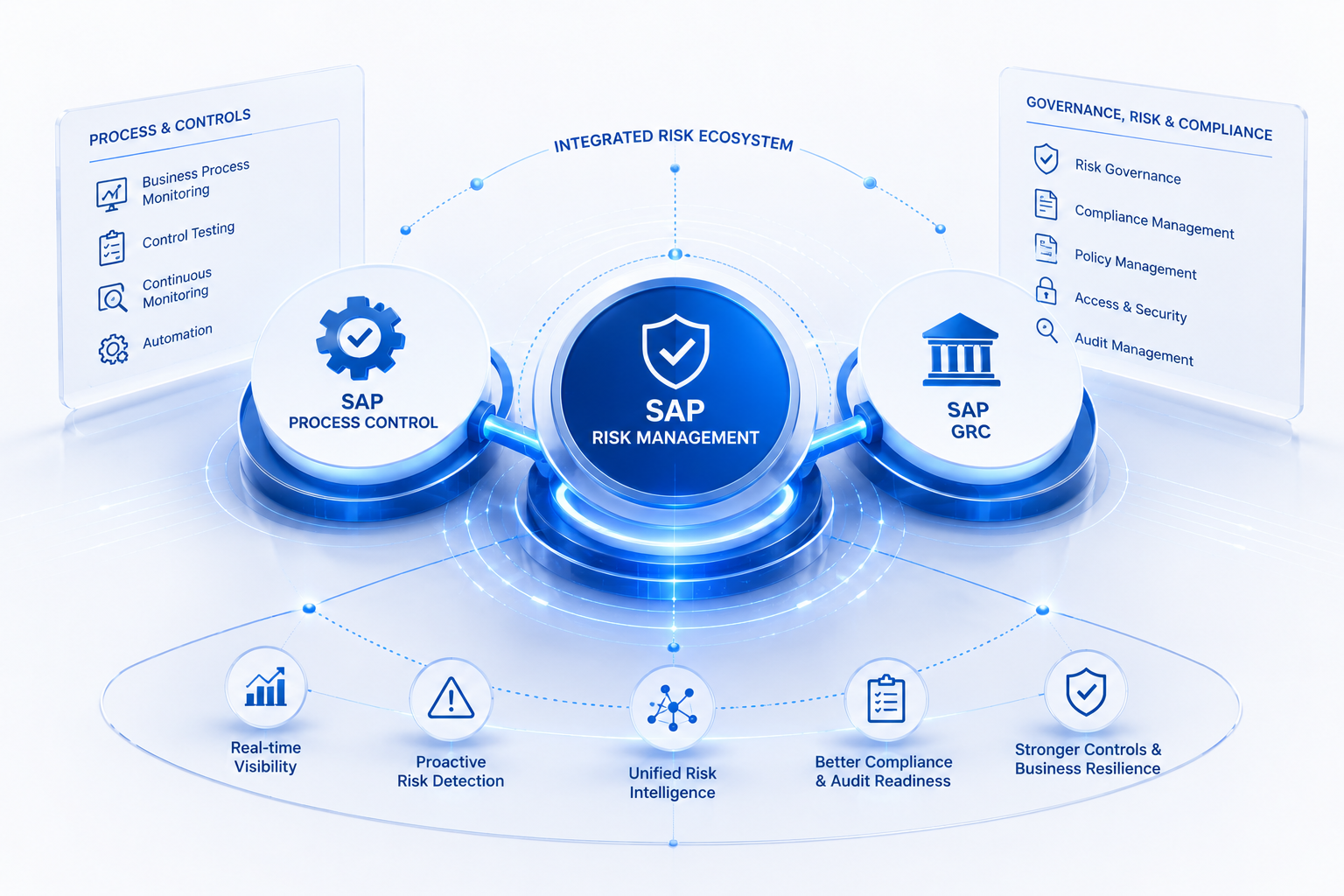
| SAP GRC Module | Role in ERM | Integration Point |
|---|---|---|
| SAP Risk Management | Enterprise risk register, KRI monitoring, risk assessment workflows, and scenario modelling. | Links risks to business processes, controls, and organisational objectives. |
| SAP Process Control | Internal control documentation, control testing, and Continuous Control Monitoring (CCM). | Links controls directly to the risks they are designed to mitigate. |
| SAP Access Control | User access governance and Segregation of Duties (SoD) enforcement. | Prevents access-related risks from materialising in ERP transactions. |
| SAP Audit Management | Audit planning, risk-based audit scoping, and audit findings tracking. | Uses the enterprise risk register to prioritise audit activities. |
| SAP Analytics Cloud | Risk dashboards, board-level reporting, and scenario visualisation. | Provides executive-level risk intelligence from SAP GRC data. |
This integrated architecture means that when a control failure is detected in SAP Process Control, it automatically elevates the residual risk score of the related risk in SAP Risk Management creating a live, connected view of the organisation’s risk and control environment rather than maintaining them as separate data sets.
Which Industries and Regions Benefit Most from SAP-Based ERM?
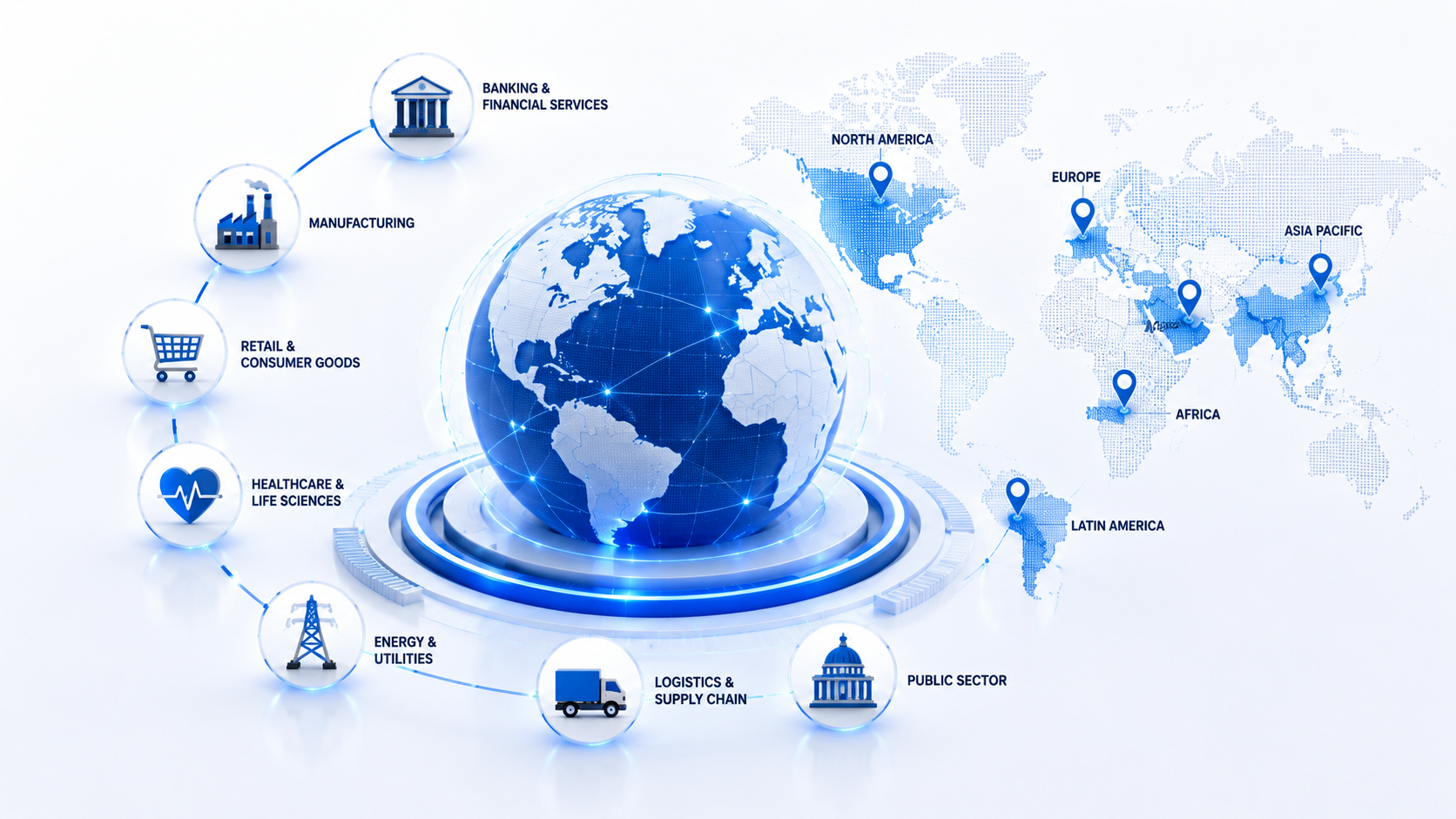
By Industry
| Industry | Primary ERM Risk Categories | SAP Module Most Relevant |
|---|---|---|
| Manufacturing | Supply chain disruption, quality risk, operational safety. | SAP Risk Management, SAP Process Control |
| Financial Services | Credit risk, regulatory compliance, fraud risk. | SAP Risk Management, SAP Fraud Management, SAP GRC |
| Energy & Utilities | Operational risk, environmental compliance, cybersecurity. | SAP Risk Management, SAP Access Control |
| Retail & Distribution | Inventory risk, supplier risk, demand volatility. | SAP Risk Management, SAP Analytics Cloud |
| Pharma & Healthcare | Regulatory compliance, product quality, recall risk. | SAP Risk Management, SAP Process Control |
| Public Sector | Governance, audit compliance, procurement integrity. | Full SAP GRC Suite |
By Region
- India: Multi-entity enterprises navigating GST compliance, RBI regulations, SEBI obligations, and multi-state operational risk benefit from SAP ERM as the unifying risk platform particularly where different regulatory requirements apply to different legal entities within the same group.
- Saudi Arabia (KSA): Vision 2030 is raising governance expectations for Saudi enterprises. ZATCA compliance risk, supply chain risk for mega-project participants, and cybersecurity risk in increasingly digital operating environments all require structured ERM frameworks with real-time monitoring. For the full digital transformation picture driving these governance requirements, read how Middle East enterprises are competing globally with SAP
- UAE: Enterprises in the UAE face a multi-jurisdictional risk environment mainland vs free zone regulatory requirements, multi-currency financial risk, and VAT compliance obligations that benefit from the unified risk visibility SAP ERM provides.
- Egypt: Manufacturing and distribution enterprises in Egypt operating in a multi-currency, import-intensive environment face significant supply chain and financial risk that requires systematic ERM supported by live ERP data.
Looking to implement or optimize this in Dubai or the UAE?
Speak with WMS Middle East certified SAP consultants for a customized architectural and cost assessment.
What Are the Most Common ERM Implementation Mistakes Enterprises Make?
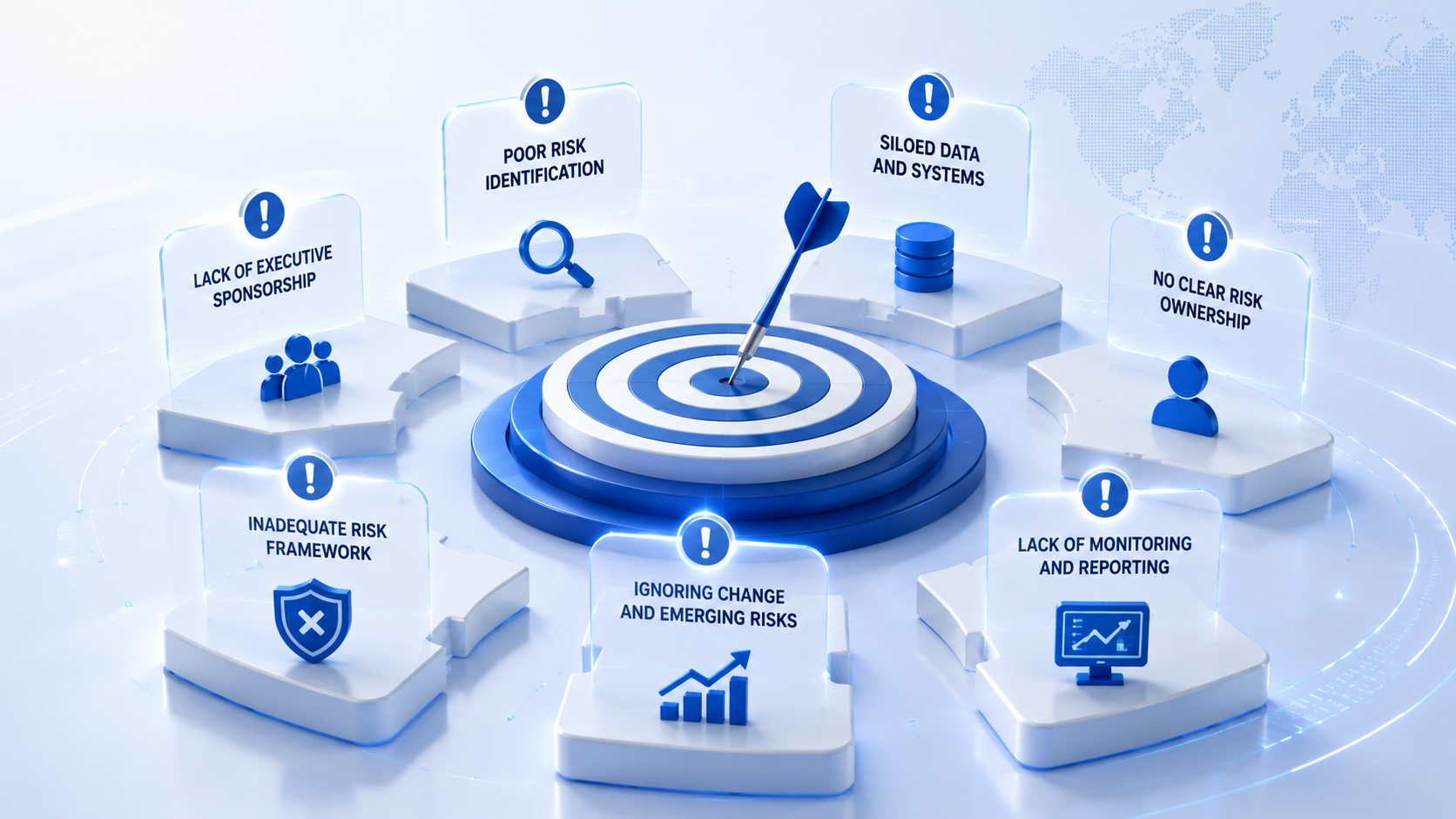
- Building a risk register in isolation from business processes creating a compliance document rather than a live management tool.
- Defining too many risks without prioritisation making the risk register unmanageable and leading to risk owner disengagement.
- Setting KRIs without connecting them to live data sources resulting in manual KRI updates that are slow, inconsistent, and unreliable.
- Treating ERM as a finance or audit function rather than a board-level strategic programme limiting its authority to drive real change.
- Implementing risk management without integrating it with the control framework so risks and controls are managed separately and never reconciled.
- Under-investing in risk owner training leading to inconsistent risk assessments that undermine the credibility of the programme.
How Can WMS Help You Build a Data-Driven ERM Programme on SAP?
WMS works with enterprises across India and the Middle East on SAP GRC implementation including SAP Risk Management, SAP Process Control, and SAP Access Control. Our approach to ERM implementation begins with the business context: what are the organisation’s strategic objectives, what risks threaten them, and what data is available to monitor those risks in real time. For a foundational overview of what SAP GRC is and how the modules work together, read our SAP GRC guide for enterprise risk and compliance.
To ensure seamless project governance, consult with an accredited SAP implementation partner in Dubai with proven regional experience.
We help organisations design risk frameworks that are practical and adopted by the business not just technically configured. Whether you are building ERM from scratch, migrating from spreadsheet-based processes, or integrating risk management into an existing SAP GRC deployment, WMS can provide a structured implementation roadmap that delivers measurable outcomes.

Frequently Asked Questions (FAQs)
What is Enterprise Risk Management (ERM)?
Enterprise Risk Management (ERM) is the process of systematically identifying, assessing, monitoring, and responding to risks across an organisation’s full business landscape connecting risk to strategy, operations, compliance, and reporting in an integrated framework.
What is SAP Risk Management?
SAP Risk Management is an AI-powered ERM application within the SAP GRC suite. It allows organisations to build and maintain a live enterprise risk register, define Key Risk Indicators connected to real-time SAP data, run qualitative and quantitative risk assessments, and automate risk monitoring workflows.
What are Key Risk Indicators (KRIs) in SAP?
Key Risk Indicators (KRIs) are measurable metrics that signal when a risk is approaching or exceeding its acceptable threshold. In SAP Risk Management, KRIs are connected to live SAP HANA data enabling automated alerts when thresholds are breached, rather than relying on manual monitoring cycles.
How does SAP Risk Management differ from a spreadsheet-based risk register?
A spreadsheet risk register is static, manually maintained, and disconnected from operational data. SAP Risk Management is dynamic KRIs pull from live ERP transactions, control failures automatically update residual risk scores, and workflows enforce accountability. The result is continuous risk intelligence, not a periodic compliance document.
What is Monte Carlo simulation in SAP Risk Management?
Monte Carlo simulation is a quantitative risk analysis technique that models probabilistic outcomes across a large number of scenarios. SAP Risk Management supports Monte Carlo simulations to help risk teams understand the range and likelihood of risk impacts particularly useful for financial risk, project risk, and supply chain disruption modelling.
How does SAP Process Control support ERM?
SAP Process Control documents and tests the internal controls that are designed to mitigate identified risks. When integrated with SAP Risk Management, control failures detected through Continuous Control Monitoring automatically increase the residual risk score of the related risk creating a live, connected risk-and-control picture.
Is SAP Risk Management part of SAP GRC?
Yes. SAP Risk Management is one of the core modules within the SAP GRC (Governance, Risk, and Compliance) suite, alongside SAP Access Control, SAP Process Control, SAP Audit Management, and SAP Fraud Management. The modules are designed to work together as an integrated governance and risk platform.
What new features does SAP GRC 2026 introduce for risk management?
SAP GRC 2026 introduces a new flexible risk analysis type for multi-horizon assessments, multi-stage multi-path workflows for risk review and approval, AI-driven KRI design that identifies relevant data sources automatically, and deeper integration with regulatory content libraries including NIST.
Which industries benefit most from SAP-based enterprise risk management?
Manufacturing, financial services, energy and utilities, pharmaceuticals, retail, and public sector organisations benefit most particularly where regulatory obligations, supply chain complexity, or operational risk require structured, auditable risk management frameworks connected to live operational data.
How can WMS help implement SAP Risk Management?
WMS provides end-to-end SAP Risk Management implementation services from risk framework design and KRI definition to SAP GRC configuration and integration with SAP Process Control and SAP Access Control. With experience across India and the Middle East, WMS helps enterprises build ERM programmes that are both technically sound and operationally adopted. Contact WMS to discuss your requirements.

Mahitab Maher
SAP professional specializing in SAP products, helping companies turn complex processes into smooth, scalable operations.


